
Table of Contents
Why get a proper women’s gym shoe
Setting your foot in the gym door can be overwhelming as is. But we want to make you feel more confident from day one by helping you choose the right pair of trainers.
There is a good reason why major athletic brands developed a separate category of gym footwear. These shoes are intentionally designed to handle the most common exercises that ladies perform at the gym.
And while you can get away with doing one or two sessions in your beloved pair of running kicks or sporty sneakers, most of them lack the necessary features to support a serious workout program.
Can you work out in running shoes?
Only if running on a treadmill is all you do at the gym.
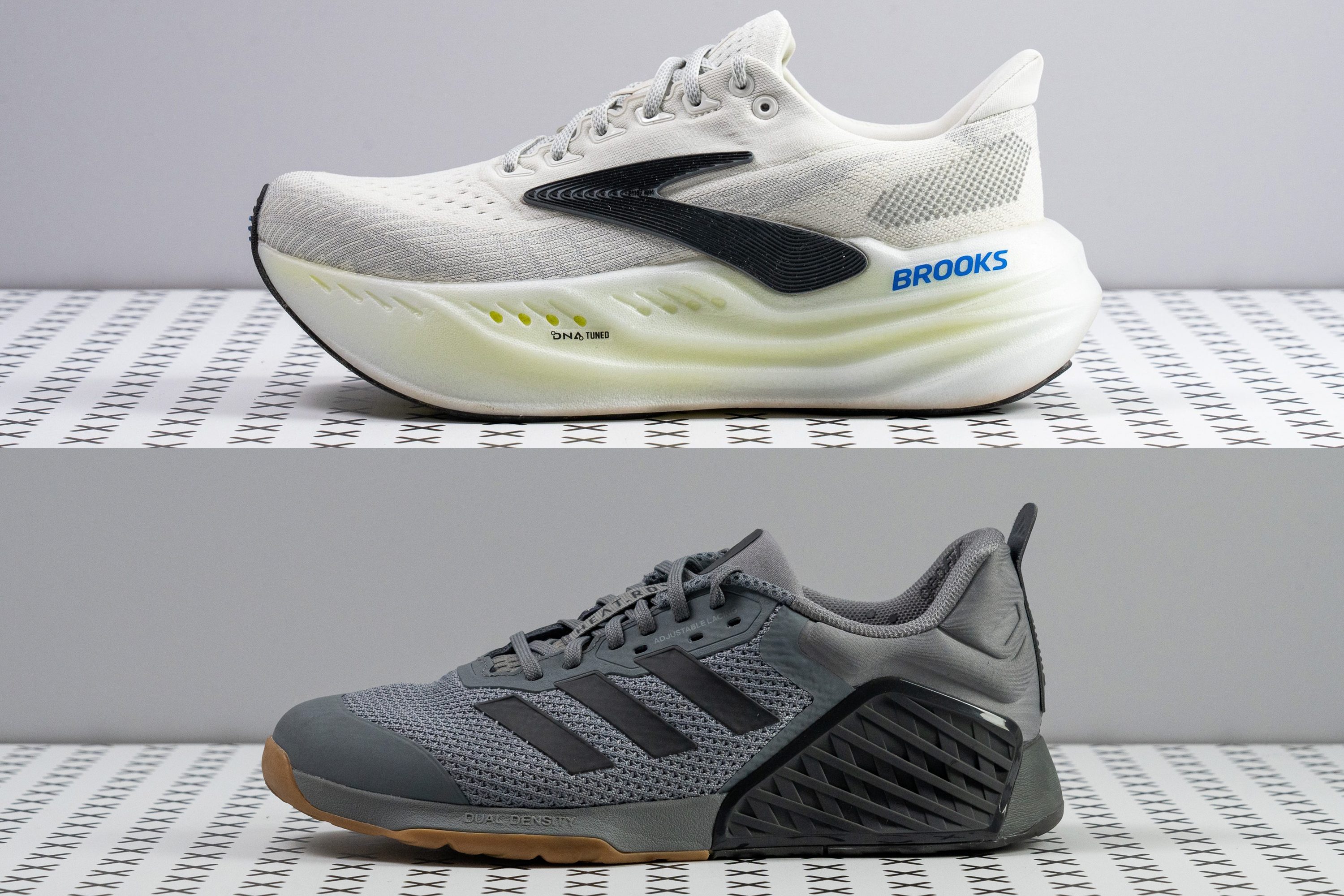
It is crucial to understand that all running shoes are designed with only one movement in mind – running (duh). It is a perpetual forward motion that doesn’t involve any forceful side-to-side jumping or lifting metal objects that are 2x your body weight.
Most running shoes are horrible for gym use because:
1. They are too plush for strength training: Max-cushioned midsoles made of squishmallow foams compress very easily under any weight. This causes a lot of wobbling when you squat with a loaded barbell or do kettlebell swings.
It also makes you feel very unstable during one-legged exercises like Bulgarian split squats. Not to mention that they feel mushy and disconnected when you get on a bike during spin classes or use a rowing machine.
2. They offer little-to-no lateral support: Most running shoes lack proper support for side lunges, lateral bounds, skater hops, and many other high-impact side-to-side movements.
3. Their curved soles detract from stability: Your feet need a flat and wide platform to maintain good contact with the gym floor when working out. Toe rockers and heel bevels of running shoes make it feel like you’re trying to stand still on a rocking chair.
Can you work out in casual sneakers?
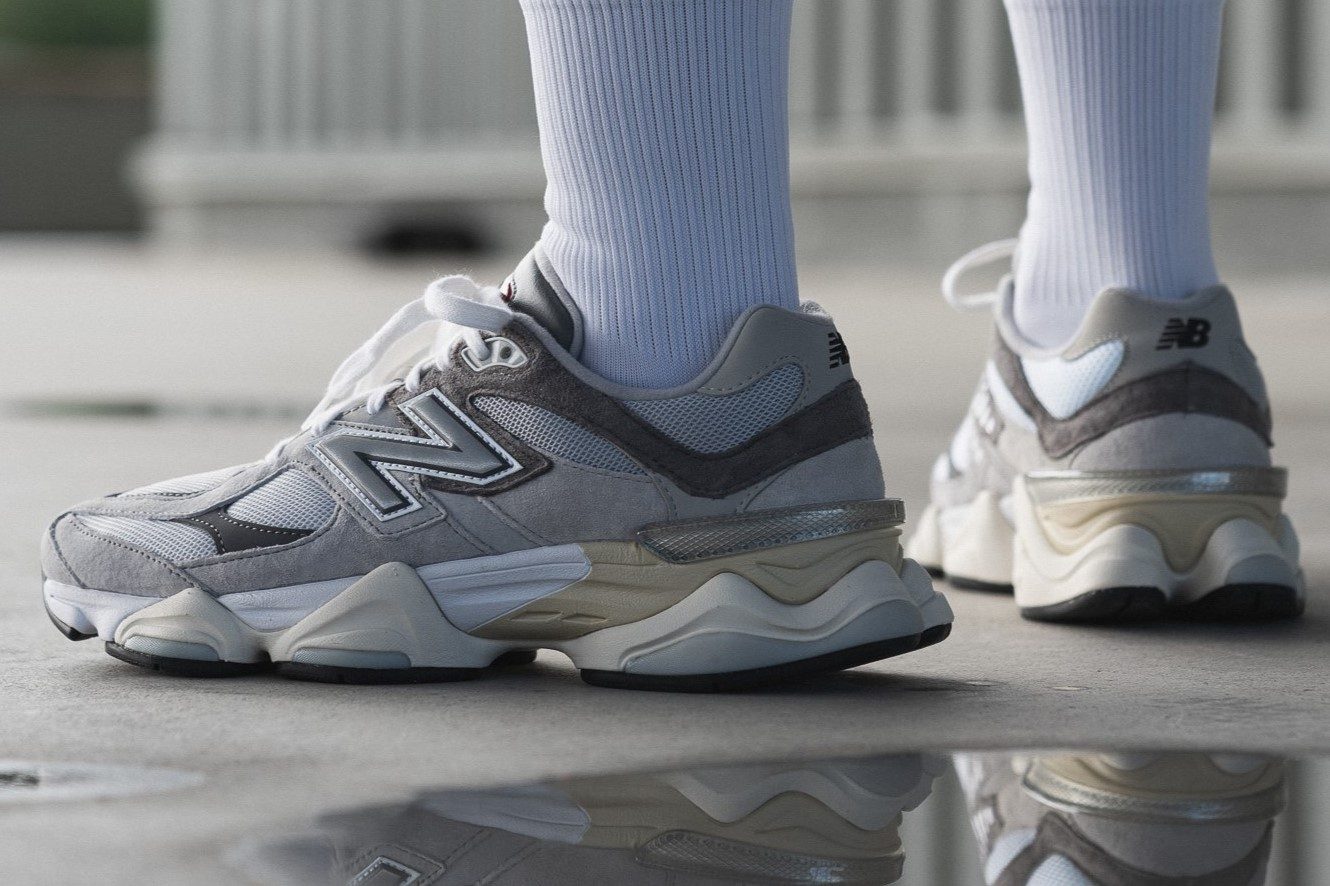
If you try to create a mood board for a “women’s gym outfit” on Pinterest, you will see most photos featuring lifestyle sneakers like New Balance retro kicks or some variation of Nike Air Max sneakers. But are they actually good for working out?
Some of them, yes.
If you feel like a sneaker provides enough stability and support, impact protection for jumps, and firmness for lifting weights, there is no problem with wearing it to the gym. Especially if their style appeals to you and makes you feel motivated to keep grinding. Also, if you are in the very beginning of your fitness journey and your workouts are of light-to-moderate intensity, some sneakers are fine to use (again, as long as they are supportive).
But just keep in mind that at some point in the future, you may want to switch to a more technical type of gym shoe to enhance your performance.
Are Converse Chucks good for the gym?
Many gym buffs people swear by their good old Chucks. They find the shoe’s firm and low-to-the-ground platform ideal for weightlifting and deadlifting in particular.
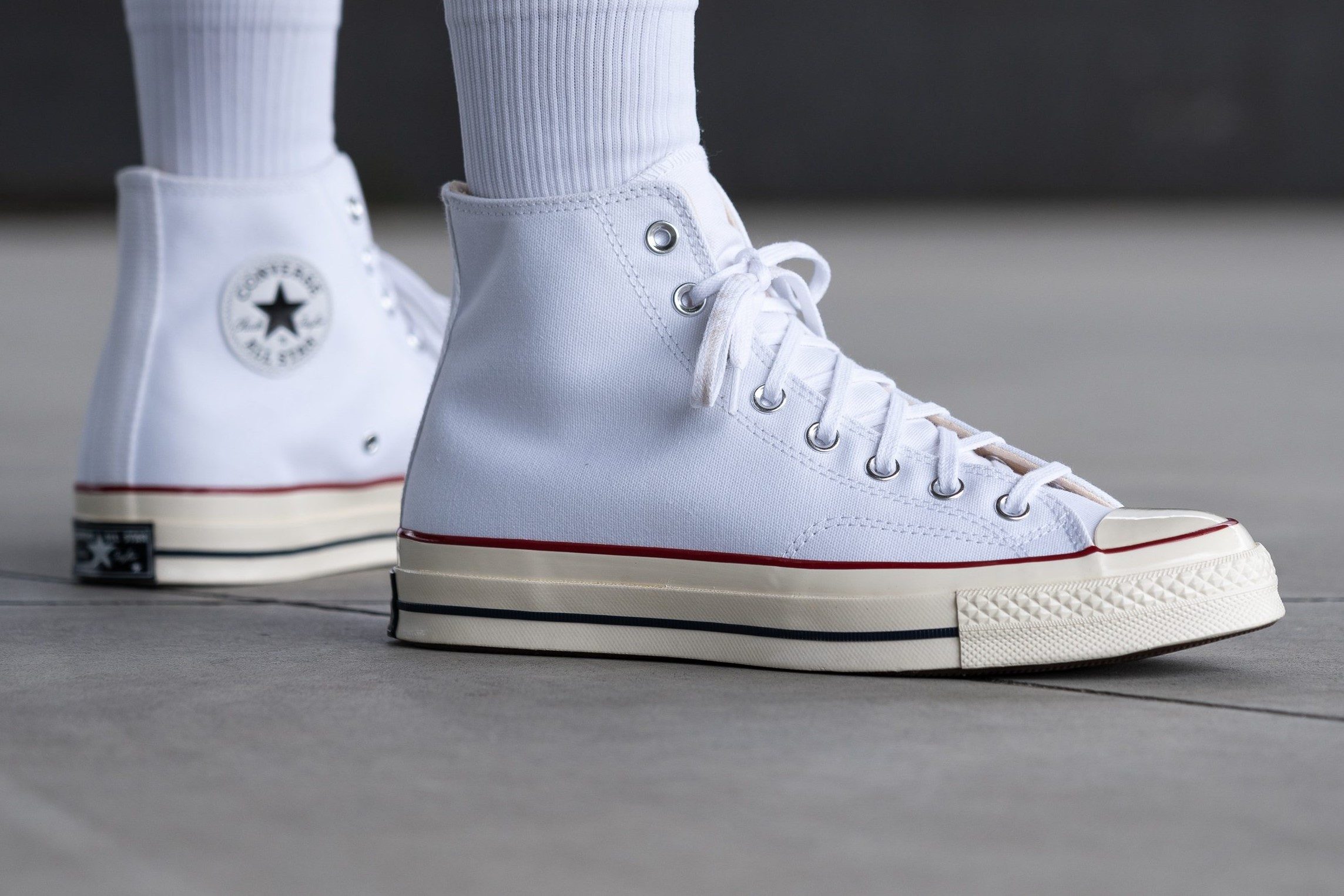
But having tested hundreds of gym shoes ourselves, we feel responsible to inform you that there are much better alternatives to this Converse sneaker (and not necessarily more expensive ones). You can find an equally stable midsole in many other trainers without having to deal with the drawbacks of this popular kick including:
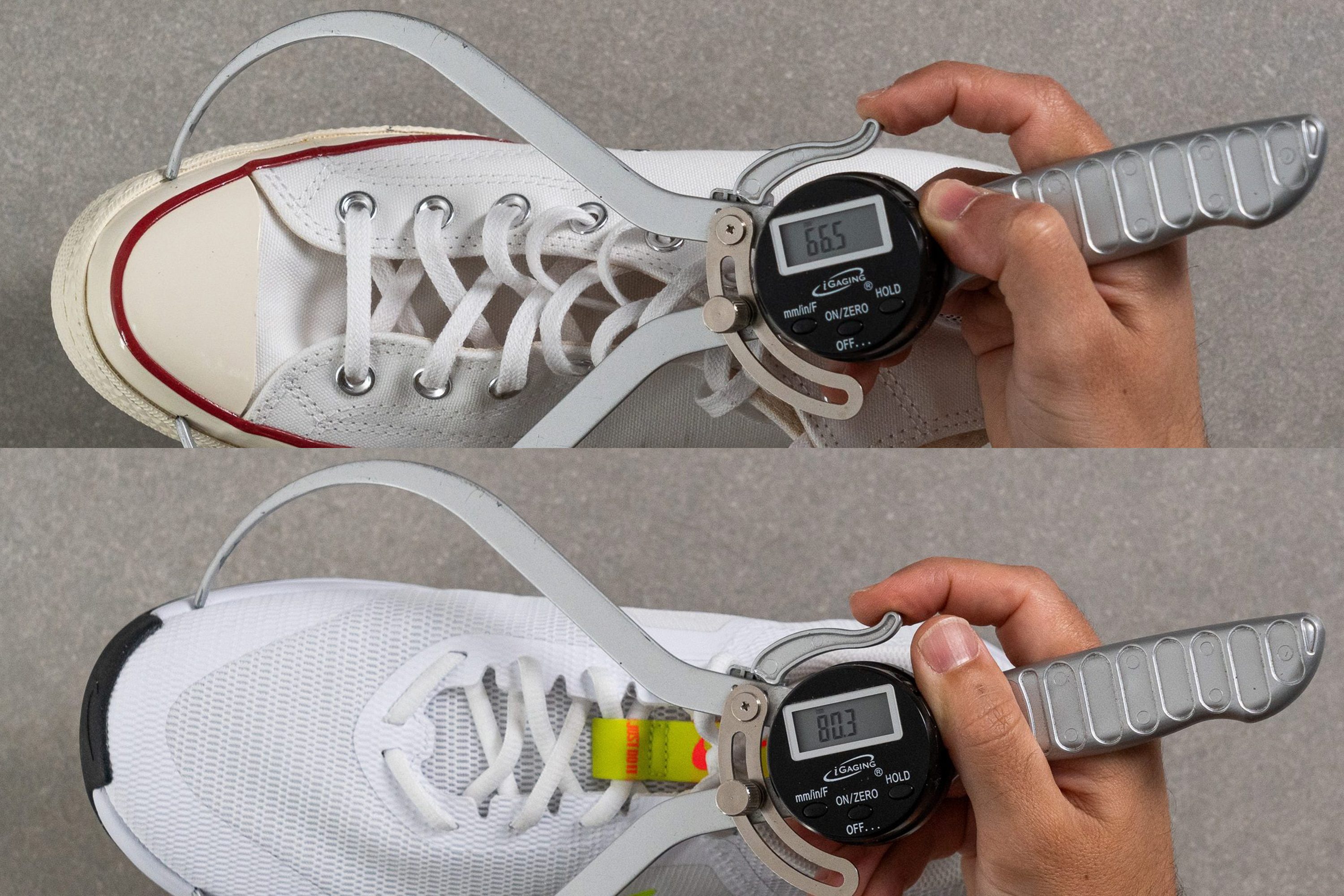
- narrower-than-average platform (we measured it to be 14 mm narrower than the average training shoe in the heel!)
- extremely narrow and pointy toebox that doesn’t let your toes splay freely
- suffocating canvas upper (breathability is only 2 out of 5 based on our tests)
Types of women’s gym shoes
Knowing what kind of gym routine you’re going to follow determines your shoe choice 100%.
Squatting with heavy weight calls for a different kind of shoe than leisurely pacing the treadmill. For your convenience, we split all gym shoes for women into four categories based on their intended gym activity:
- versatile cross-trainers for strength and cardio
- cushioned shoes for high-impact exercises
- minimalist training shoes
- stable weightlifting shoes
1. Versatile cross-trainers for strength and cardio
Best for: Crossfit, HIIT, circuit training, functional fitness, boot camp
These training shoes are ready to tackle a wide variety of exercises at the gym, even the most vigorous routines.
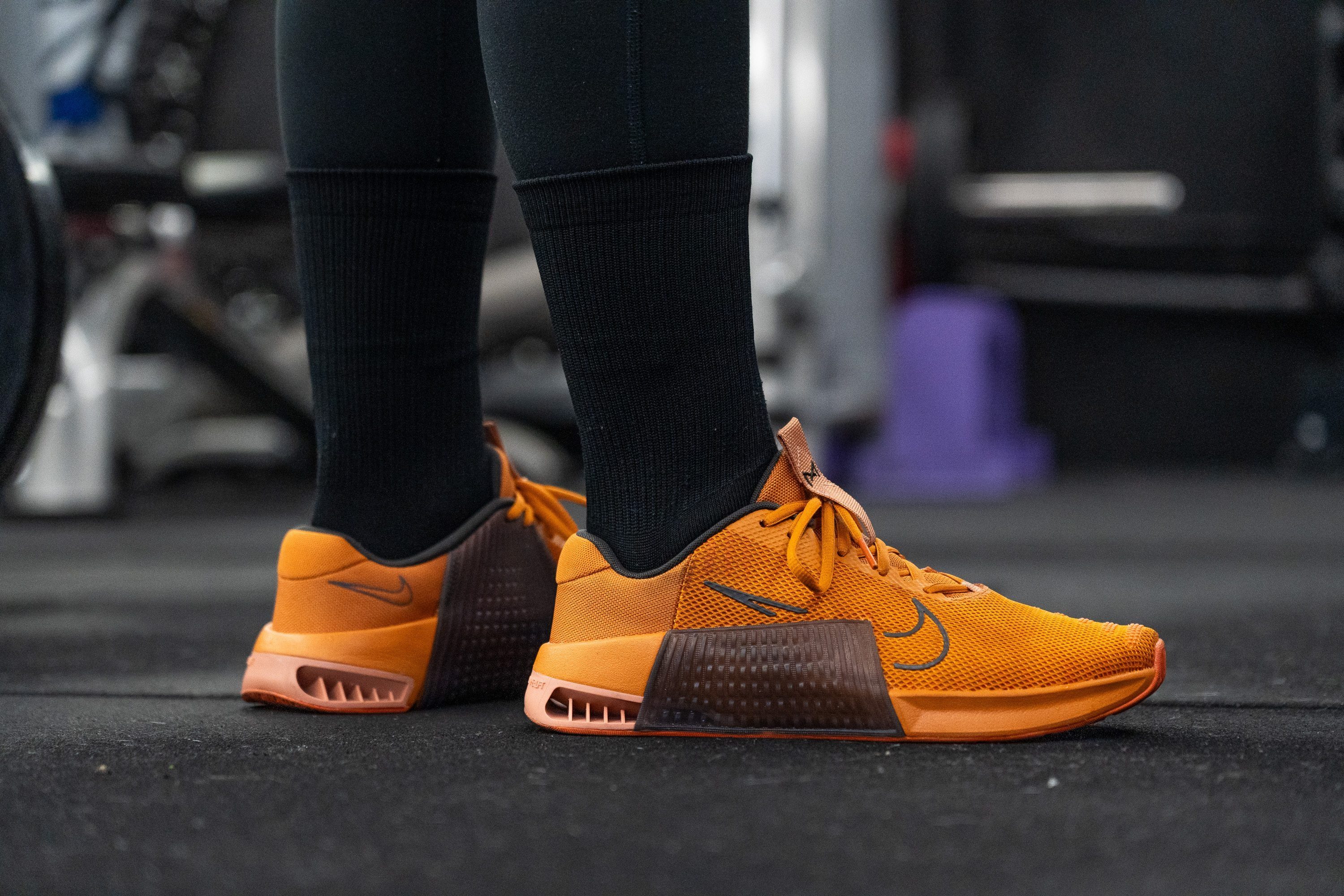
These women’s shoes allow you to transition from cardio to weightlifting effortlessly and feel equally at home in both. They provide sufficient impact protection for explosive box jumps but also keep you steady and surefooted when squatting with a loaded barbell.
Here is a checklist of shoe features to look for in a good cross-trainer for women:
Solid side support: The shoe is rigid in the heel and midfoot and is not easy to twist with your hands (high torsional rigidity).
We assess torsional rigidity on a 1-5 scale (5 is the stiffest)
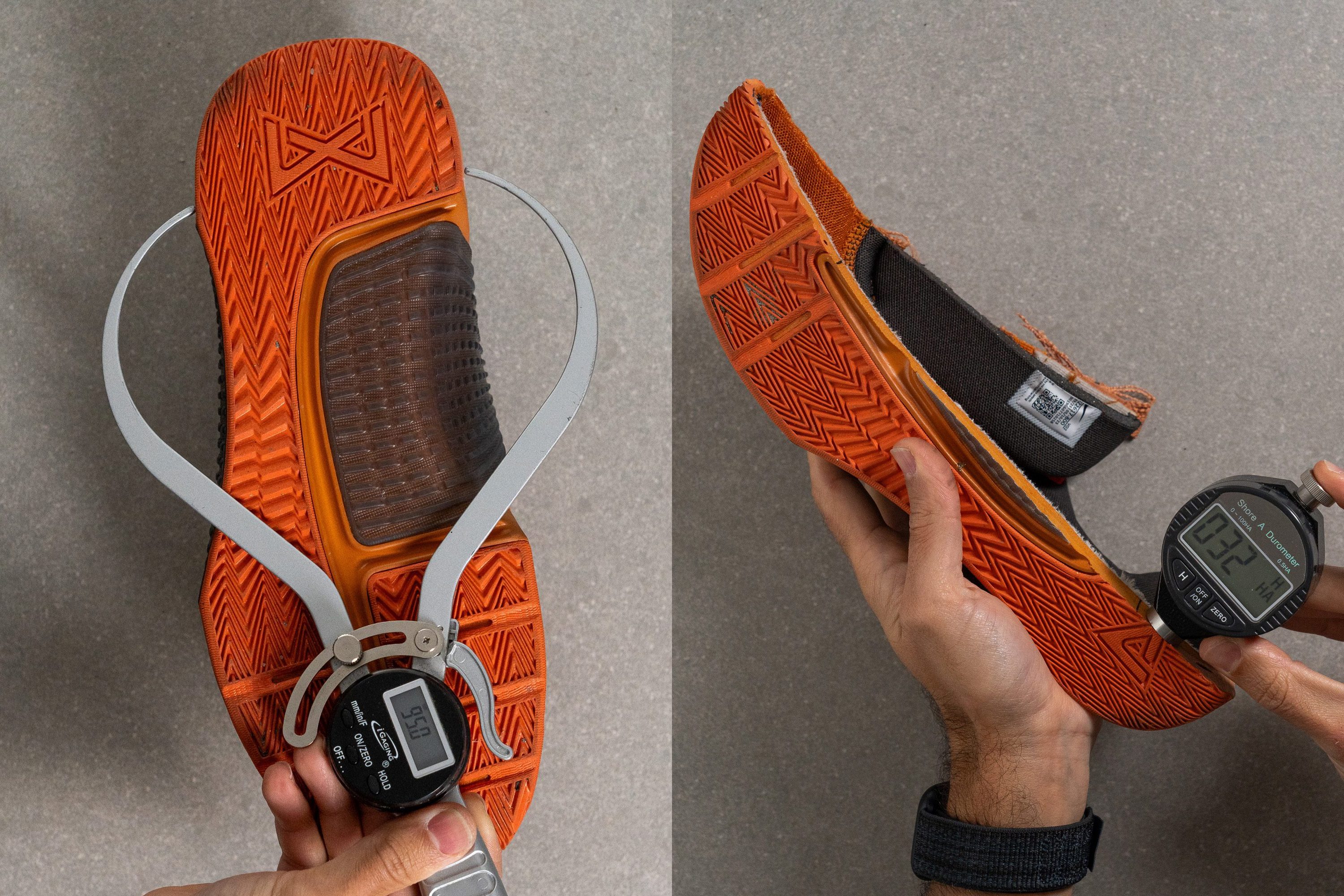
Wide and firm heel: To keep you stable when working with weights (dumbbells, kettlebells, barbells), you need a wide base to rely on and a midsole that doesn’t compress so easily.
We use a Shore A durometer to measure firmness and a digital caliper to measure width.
Stiff and padded heel counter: Locking your heel and ankle down in place, a strong heel counter prevents undesirable shifting in the rearfoot. It lowers the risk of foot spills and rolls during side-to-side movements and makes you feel more supported overall.
We assess heel counter stiffness on a 1-5 scale (5 is the stiffest)
There are many other shoe features to consider (we will go over them in the sections below) but these 3 are the must-haves of versatile women’s cross-trainers.
We gathered all women’s gym shoes that tick the aforementioned boxes in the table below:
2. Cushioned shoes for high-impact exercises
Best for: aerobics, cardio classes, treadmill, jumping rope
If you love burning as many calories as possible in a fast-paced and high-impact workout routine, your gym shoes should be cushioned accordingly.
In our shoe lab, we measure the shock absorption of all women’s gym shoes in both the heel and the forefoot following the ASTM F1976 protocol. The SA measurement we record reflects the amount of impact protection you can expect in a given shoe–the higher the SA score, the better the cushioning.
Thus, a measurement of 90 SA or more in the heel implies maximum shock absorption you can expect in a women’s gym shoe.
Shoe lightness is equally important for quick-footed routines. It’s hard to feel agile in a bottom-heavy shoe.
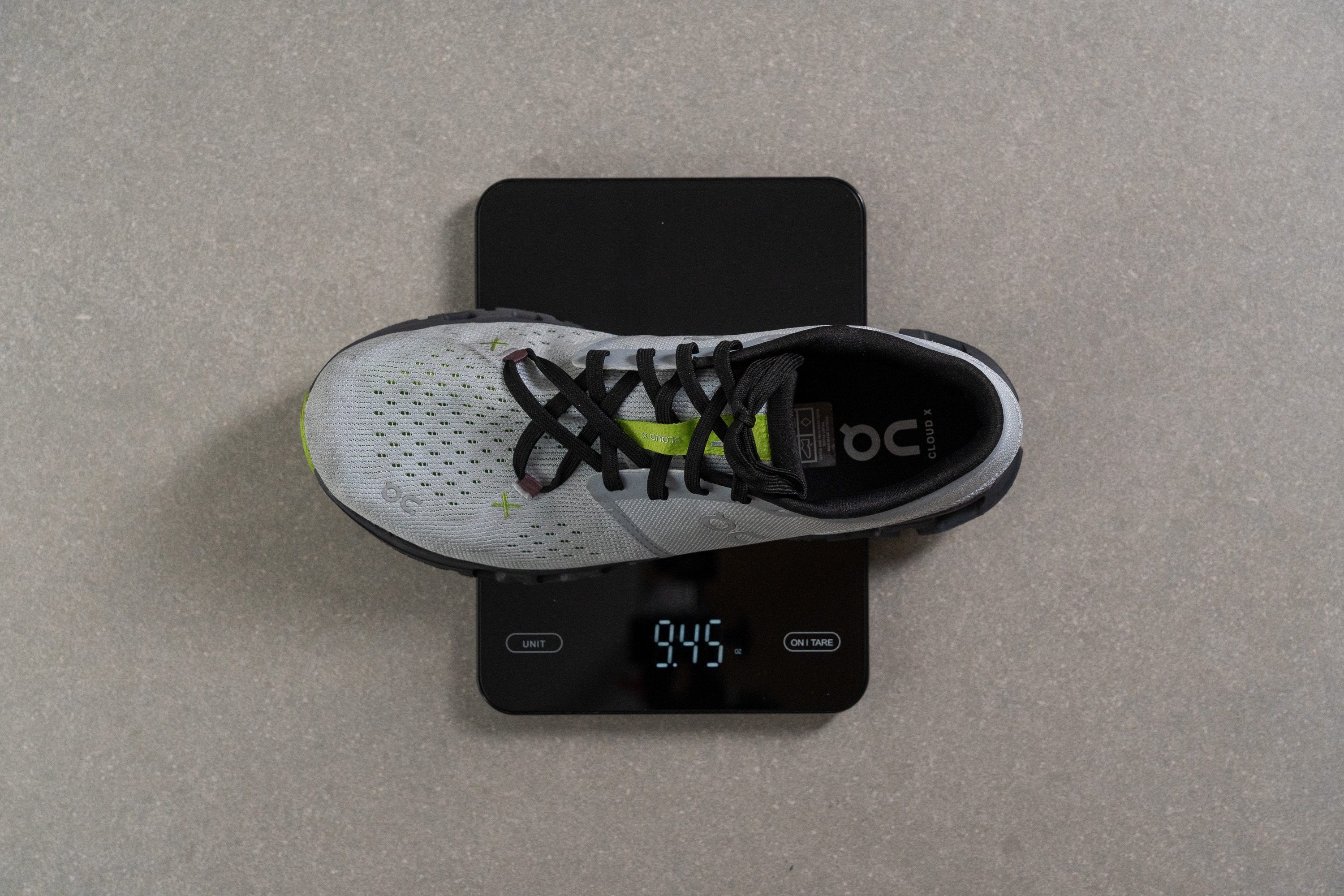
Trainers that weigh 10.6 oz (300g) or less make it to our catalog of lightweight women’s gym shoes.
3. Minimalist training shoes
Best for: working on foot strength
As a beginner gym goer, we don’t recommend that you get a pair of minimalist trainers from the start.
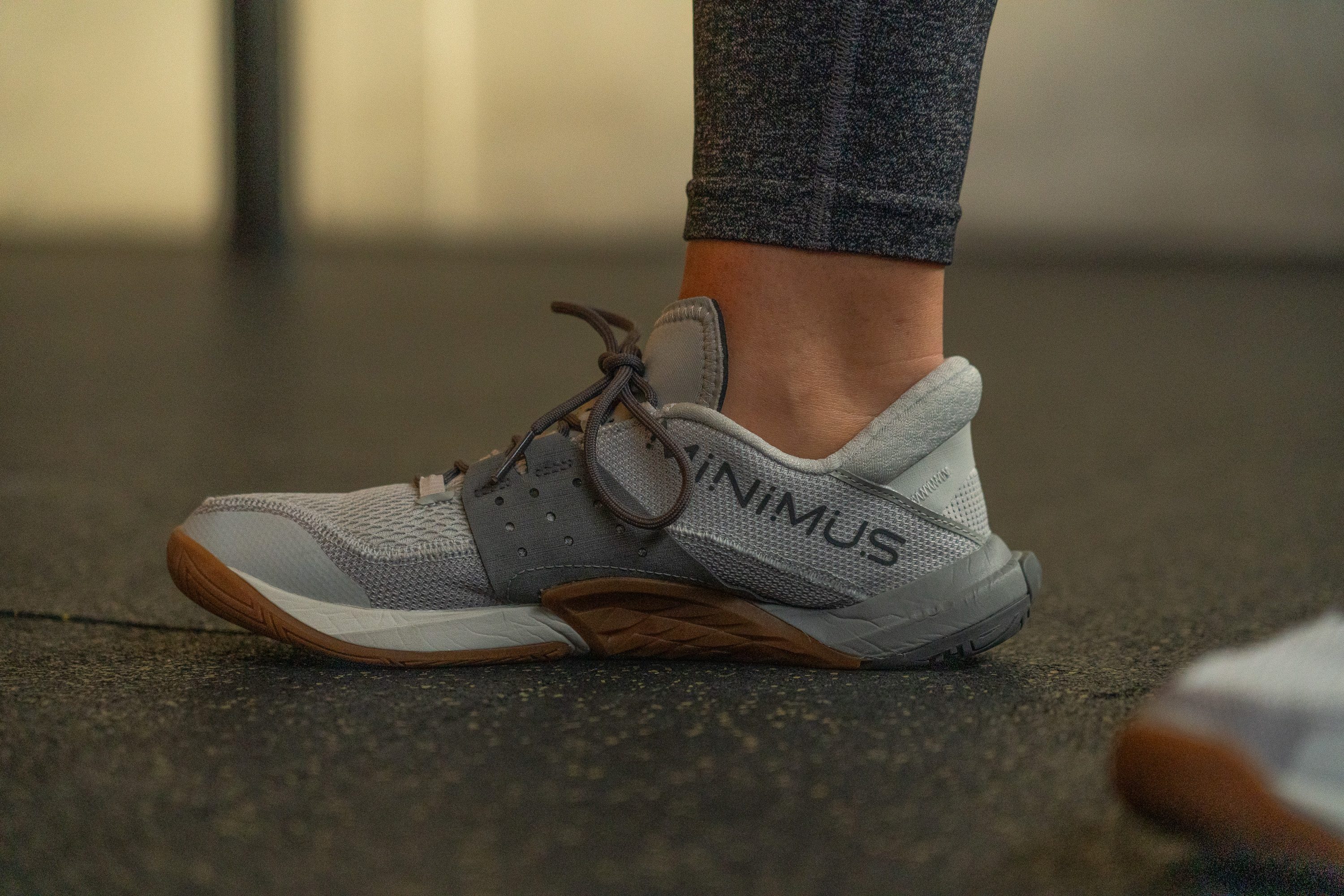
These shoes have no cushioning or additional support and feel almost as if you are training barefoot but with some basic protection from the ground. Seasoned athletes sometimes incorporate these shoes into their rotation to further engage and strengthen their foot and leg muscles.
But please note that these folks have already built a strong foundation and exercise technique and use minimalist shoes as a way to enhance their training. Even they should start slowly and mindfully when switching to minimalist shoes to avoid injury.
Minimalist trainers are easy to detect by the following features:
- Ultra-thin sole (10-15 mm)
- Very flexible (easy to bend and twist)
- Extra lightweight (barely felt on foot)
4. Stable weightlifting shoes
Best for: Olympic weightlifting, powerlifting
Ladies who build their workout routine around strength training and lifting heavy, should look into a pair of dedicated lifting shoes.
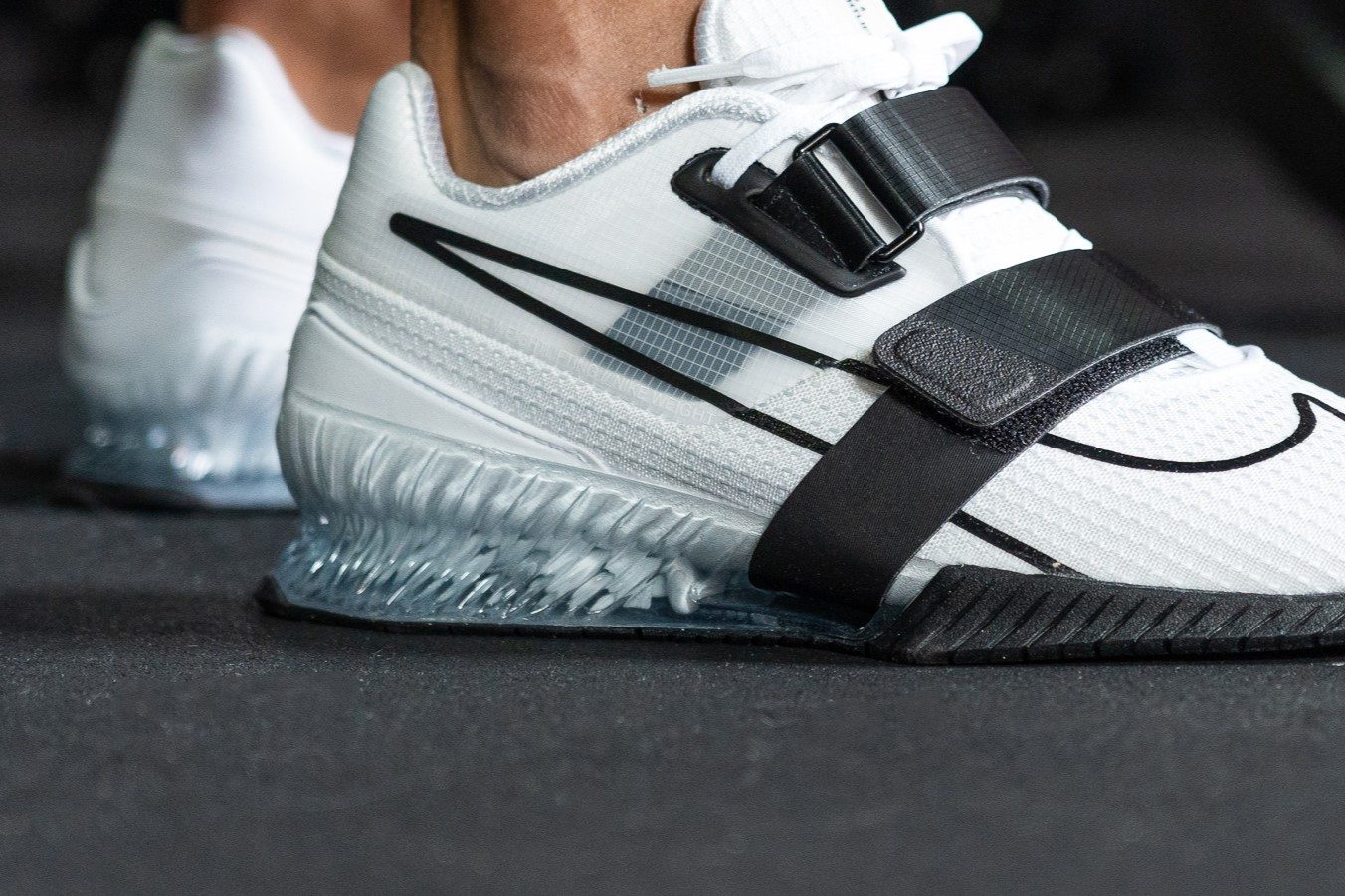
It is a very specialized footwear type which helps to improve your squatting and lifting technique with the following features:
- Raised heel (15-21 mm): enhances ankle mobility and promotes proper squat form
- Rigid platform: no power is lost because the midsole doesn’t compress
- Flat and wide base: very stable and planted experience
- Stiff upper: secure lockdown minimizes foot wobbling (often with large Velcro straps)
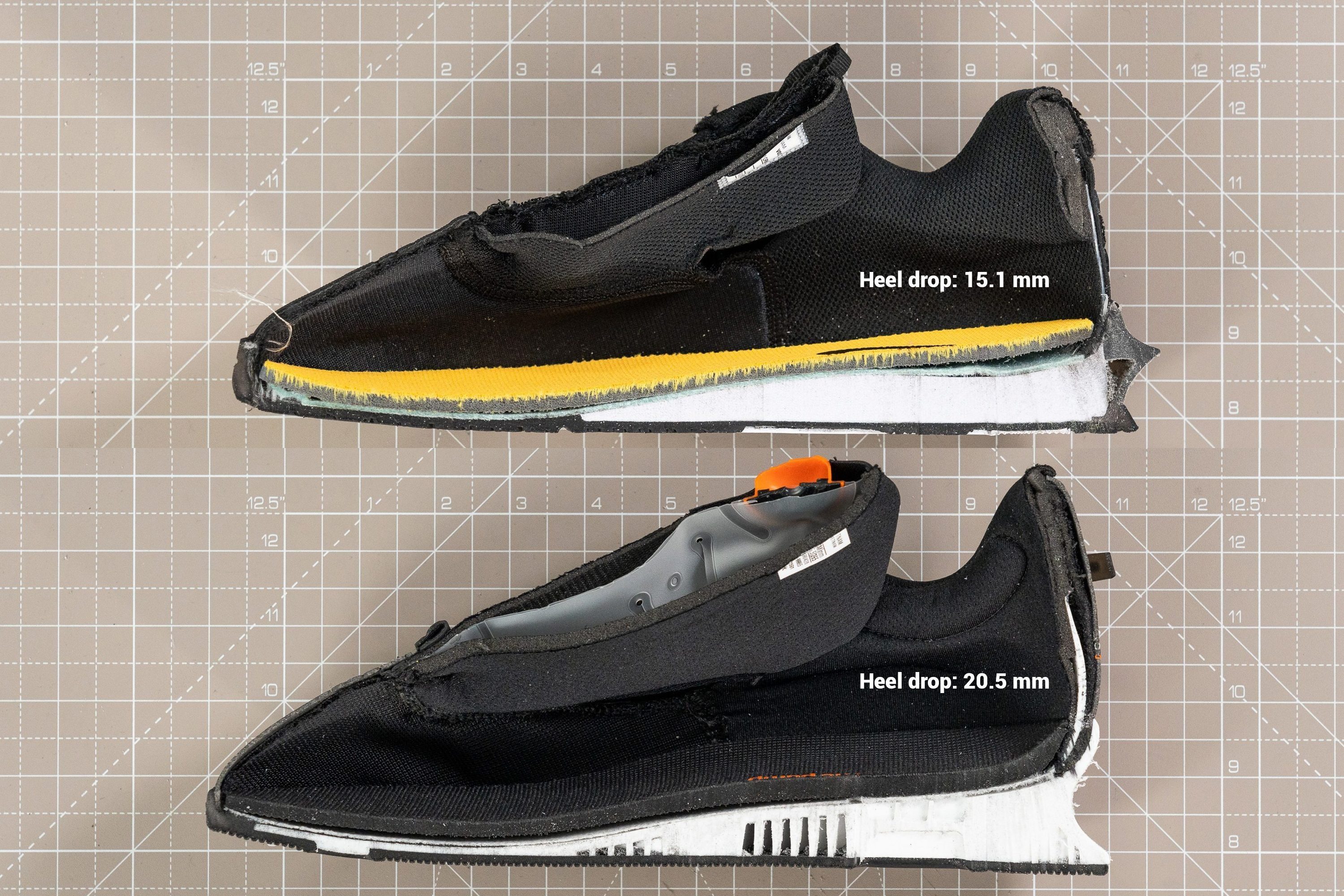
Choosing the right lifting shoe always starts with selecting the appropriate heel-to-toe drop:
- 15-16 mm (0.6 in): best for beginners as the heel elevation is not as dramatic
- 20-21 mm (0.8 in): best for advanced athletes who perform high-skill Olympic lifts and go deeper into squats
How to find the right size and fit in women’s gym shoes
Size: If you have ever tried shoes from several brands at once, you may have noticed that they don’t fit exactly the same, even in the same size.
Because there is no consistency in shoe sizing across all athletic brands, knowing your exact foot length is the best starting point. TIP: Ask a friend to trace your foot for higher accuracy.
Once you have the numbers, you can find out your size in the tool below. It contains official size charts of 40+ brands:
Fit: If you have an average-width foot, the right size almost always implies the right fit as well.
But having tested hundreds of shoes in our lab, we are still amazed at how different shoe toebox shapes can be, even in the same size.
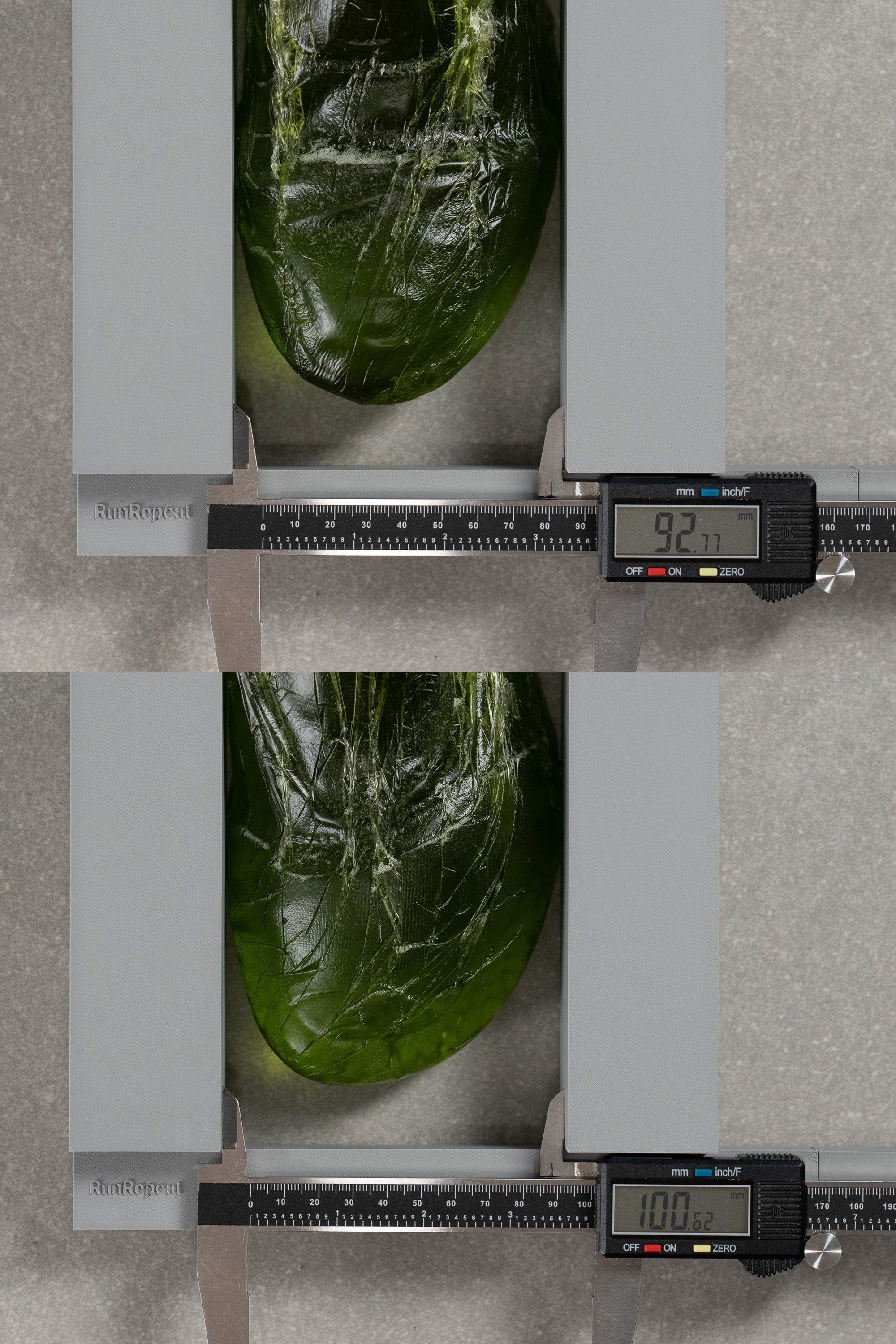
The photo above features gel molds of two different gym shoes in the same size. As our caliper measurements show, one shoe is a whopping 8 mm wider than the other!
By taking the width dimensions of each tested women’s gym shoe, we aim to let you know how much room to expect.
Here is a quick guide on choosing the right fit in a women’s gym shoe:
|
How to find the right fit in women’s gym shoes |
|
|
Narrow feet |
|
|
Medium feet |
|
|
Wide feet |
+ choose stretchy upper if you have bunions
|
TIP: When trying on new gym shoes, make sure you’re wearing the same socks that you plan to wear when working out.
Detecting a durable gym shoe
You don’t want to spend your hard-earned money on a gym shoe just to see a hole in it only a month later, right?
To avoid that, here is what you should check for:
- wear-resistant upper fabric
- wear-resistant inner lining (especially in the heel area)
- protective rubber or TPU elements (espeically if you do rope climbs)
In our lab, we assess the abrasion resistance of each gym shoe using a Dremel with a sandpaper tip. We apply the latter to various parts of the trainer to see how well it holds up. The smaller the damage, the higher the score.
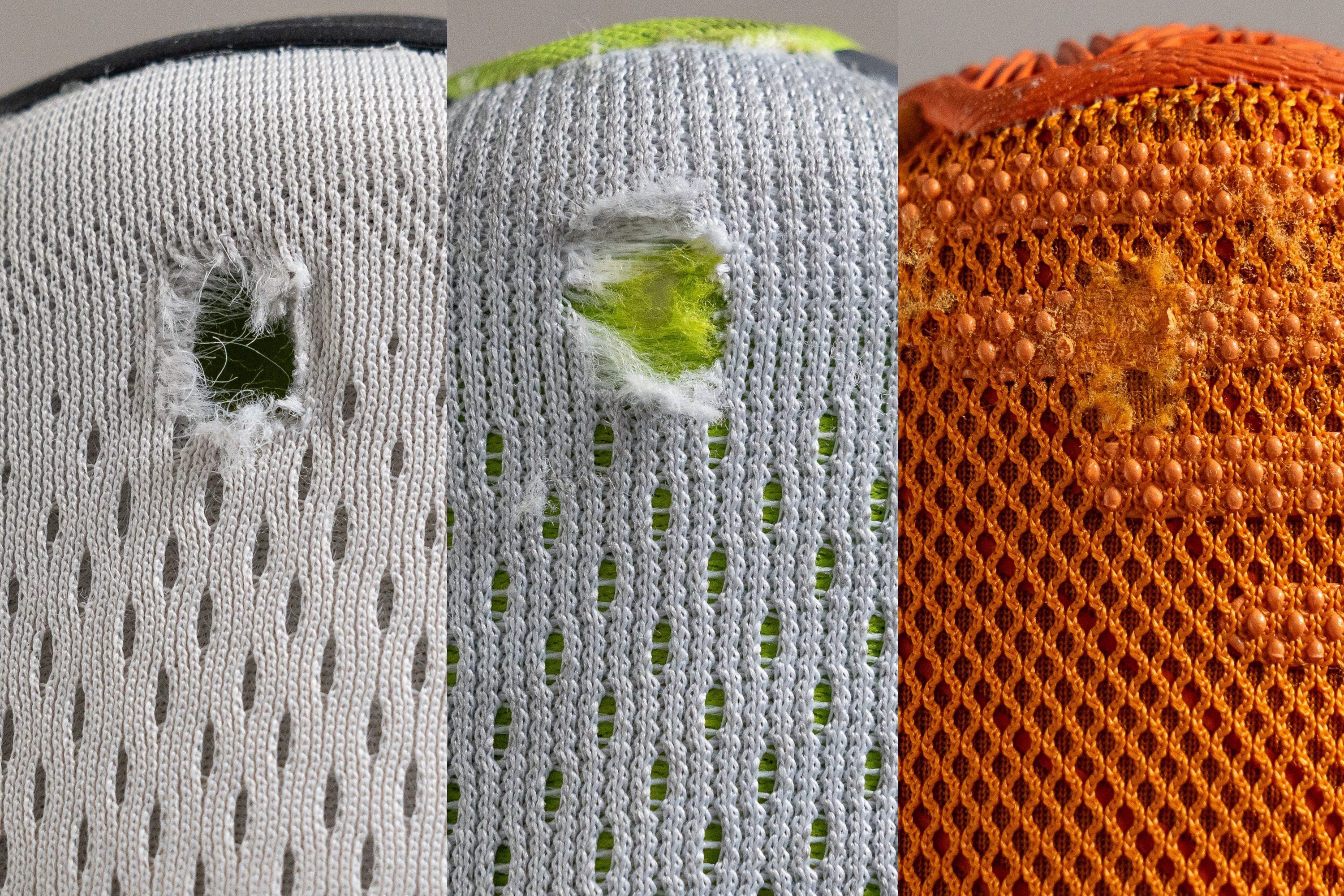
For the outsole, however, we use a tread gauge to measure the actual depth of the dent. In this case, the smaller the number, the stronger the rubber.
The table below features the most durable and abrasion-resistant women’s gym shoes we’ve tested by far:
Can you wear gym shoes outside?
If you want to get as much life as possible out of your gym pair, we wouldn’t recommend wearing it outside the gym.
In addition to faster deterioration, gym shoes don’t make the most comfortable casual shoes either (most of them). They are fine-tuned to keep you stable and steady when working out but feel too flat and overbuilt for walking.
Proper maintenance extends shoe life
Women’s gym shoes can last longer and remain in good shape with proper care. Here are a few maintenance tips:
- Regular cleaning: Clean your shoes frequently to get rid of bacteria, sweat, and grime that accumulate over time. Use a moist brush or towel and some mild soap to clean the shoe’s outside. Abrasive or strong chemicals should not be used since they can harm the materials of the shoes
- Air dry: Shoes should be air dried in a well-ventilated place after being cleaned or worn. Avoid placing them in the sun or in a hot environment since these conditions can harm the materials in the shoes and cause them to warp or shrink.
- Use a shoe tree: Or stuff the shoes with newspaper to help keep the shape of the shoe and avoid wrinkles while the shoes are not being worn.
- Rotate your shoes: Have a couple of pairs of training shoes that you can rotate to avoid shoes from deteriorating too quickly.
- Ensure proper storage: Place your shoes in a cool, dry area, away from dampness and the sun. Avoid keeping the shoes in a cramped or compact area as this could ruin their form or materials.
Consider breathability as well
In addition to discomfort, sweaty feet also put you at risk of hot spots, blisters and other foot issues. Sweat can also serve as a breeding ground for bacteria and fungi, increasing the risk of diseases like athlete’s foot and producing unpleasant odors.
That’s why it is important to look for gym shoes with proper ventilation.
Breathability varies a lot depending on the upper material.
This is one of the reasons why those leather and suede sneakers we see on the feet of fitness influencers so much do not make the best gym shoes.
To help you understand the level of breathability in a given gym shoe, we perform a series of lab tests to check its ventilation capacity.
Each trainer gets a breathability score from 1 to 5, where 5 stands for the best breathability.
How to save money on your next pair of women’s gym shoes
The average retail price of a women’s cross-training shoe hovers around $125. This is not a cheap buy, especially for a beginner gym girl.
We are here to let you know that expensive shoes should not be an entry barrier to your fitness goals. Here are a few tips to help you cut costs on the next pair of trainers:
- Compare prices: But you don’t have to manually go through every online shoe because we have done it for you! At RunRepeat, we track prices and sales from 200+ online retailers to let you know where your shoe of choice is offered for less. Set up a price alert on our respective product page to receive an email as soon as the price drops in any of the shops.
- Check previous editions: A newer edition doesn’t always mean a better shoe. In fact, sometimes it’s the other way around! But the moment a new version drops, you can catch a pretty generous markdown for the previous-season shoe (up to 75%!). Just go to our catalog page of women’s gym shoes and sort by discount.
- Check budget-friendly shoes: Every athletic brand has a line of entry-level shoes that don’t beyond the $100 price point. Here are some of the cheap entry-level gym shoes for women:
View the original article here.