
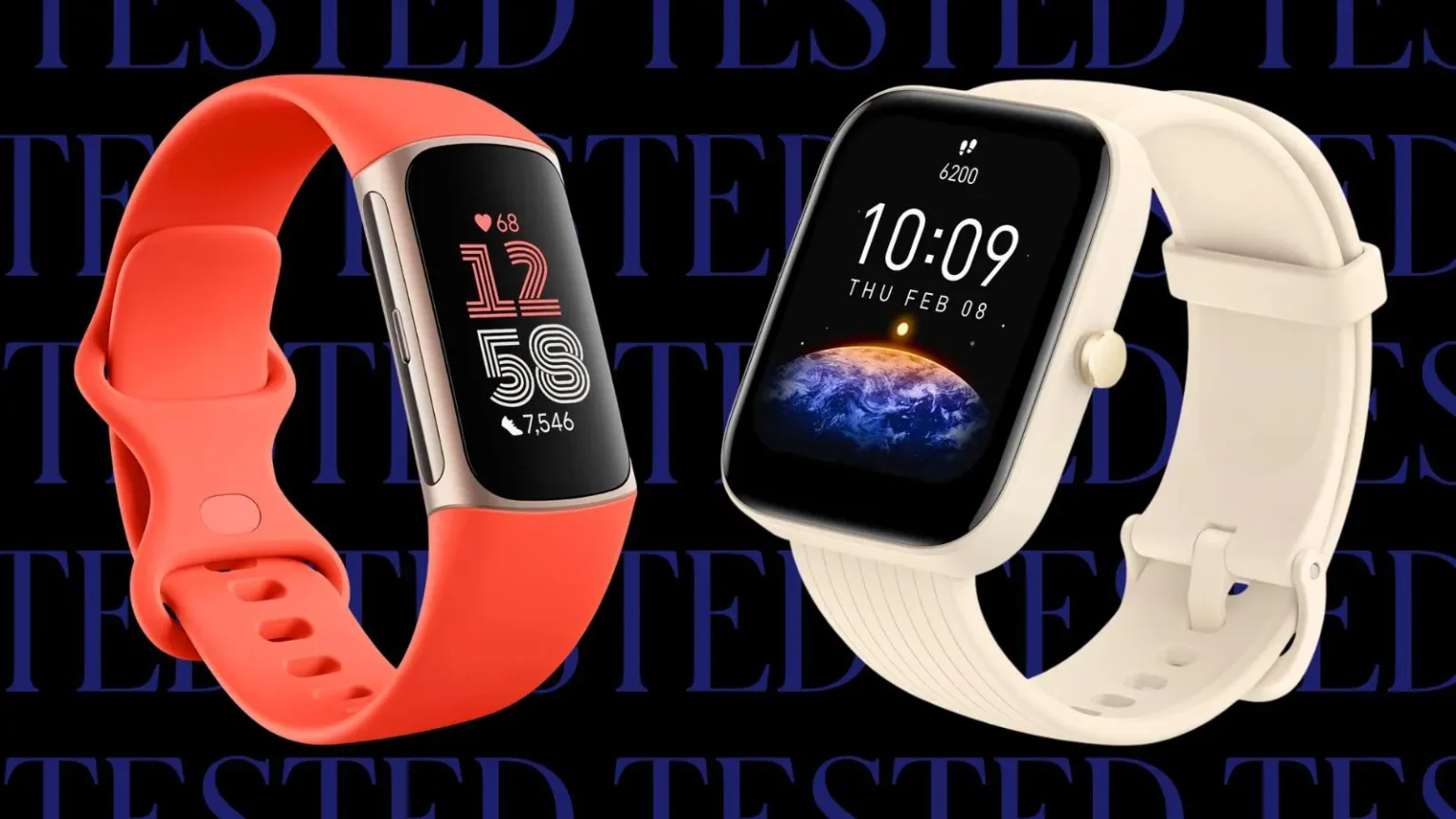
As a certified personal trainer, I often recommend fitness trackers (a.k.a. fitness watches) as tools to stay on top of your health goals. These Spy Kids-esque wearables keep tabs on just about every aspect of your health: sleep, recovery, blood oxygen levels, and respiratory and heart rate. I used my expertise as a trainer and weightlifter to find the best fitness trackers worth investing in, giving 14 top-rated models a spin. After eight months of testing, the Garmin Venu 3 won me over as the best fitness tracker overall for its versatility and accuracy; if you’re a beginner, the Fitbit Charge 6 impressed me with its level of precision despite its no-frills, user-friendly design.
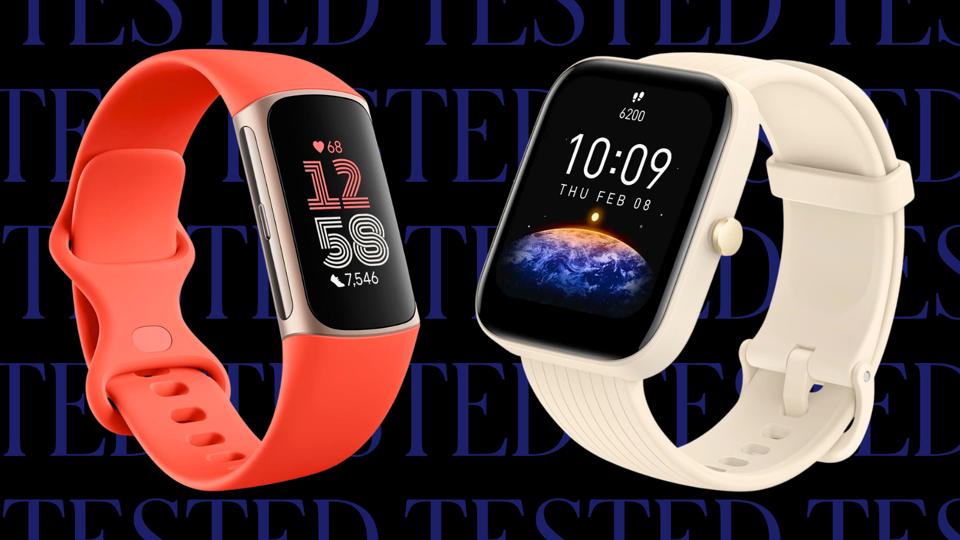
Of the 14 fitness trackers I tested, the Fitbit Charge 6 and the Amazfit Bip 3 Pro emerged as the best for beginners and the best value, respectively.
ILLUSTRATION: FORBES / PHOTOS: RETAILERS
I rigorously tested each fitness tracker based on a set of criteria, including the depth of its workout and sleep data, its usability and battery life, and its customizability for different activities. To verify accuracy, I also compared each tracker’s heart rate readings against a dedicated chest strap, which I used as a control.
While some premium smartwatches like the Apple Watch excel at both health and activity tracking, I generally recommend dedicated fitness trackers like the Garmin Forerunner 265 if the latter is your top priority: The latter typically offer specialized health features and more accurate metrics, and they’re built to be more durable and comfortable to withstand strenuous sweat sessions. (For more on how to make the most of these wearables, see my guide on how to use a fitness tracker.)
Want to save this story for later?
No need to bookmark—get it straight to your inbox.
We’ve sent this story to your inbox.
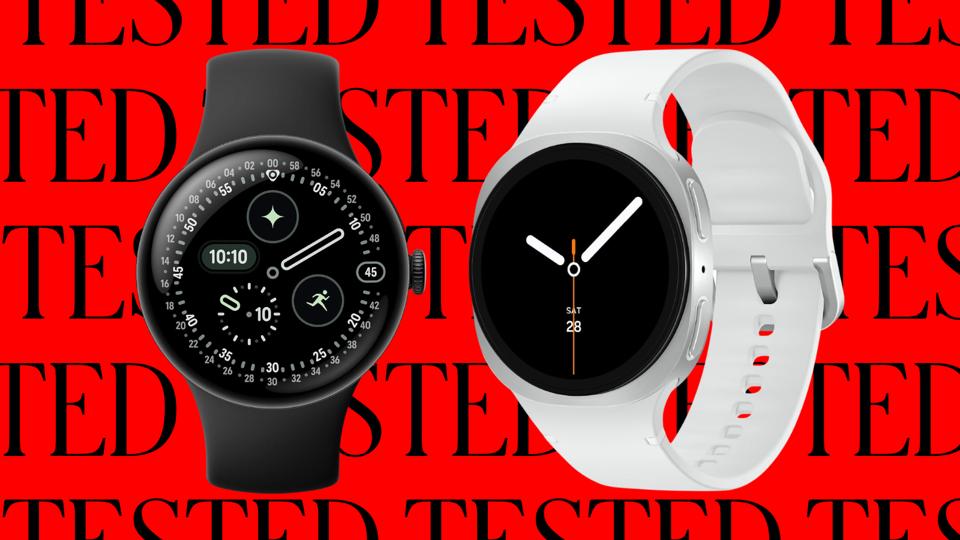
Like Garmin’s Venu 2, the Venu 3 is geared toward average gym-goers. But this version also includes upgraded features like sleep coaching, post-workout recovery insights and a more advanced heart rate sensor.
Table of Contents
Accurate And Easy To Use Mid-Workout
Out of all of the trackers I tested, the Venu 3 was the most accurate while still being easy to use. Its large 1.4-inch touchscreen and bright display made it easy to check my stats mid-workout and cycle through different health features (of which there are many).
Aesthetically, the Venu 3’s size makes it less discreet than other options. There’s no mistaking it for a watch, but the silicone band and stainless steel bezel made it one of the more attractive fitness trackers I tried. And although it was bulkier, it felt surprisingly lightweight compared with trackers of a similar size.
The Garmin Venu 3 allows you to track sets and reps while weightlifting.
katie simpson for forbes
Helpful Features Make Venu 3 Feel Like A Personal Coach
The Garmin Venu has become something of a personal coach to me after training with it for four months. I found the recovery time predictions useful for planning my daily movement after working out, including how many walks to take and when to go to bed. I was also able to create my workouts within the Garmin Connect app and load them onto the watch, down to the sets, reps and exact exercises. Most importantly, I’ve seen improved results in the gym, like PRs (personal records) during lifting and greater endurance after following the watch’s post-workout recovery advice and sleep tips.
Outstanding Battery Life, But Interface Could Be More Intuitive
The battery life also blows away any other tracker I’ve used. After noticing mid-workout that my watch was down to less than 5% in battery, the power-saving mode helped it hold on for not only the rest of my workout but three more hours after that. Other notable features include more than 30 preloaded sports apps and workouts, as well as personalized sleep coaching.
I do wish the interface was a bit more intuitive. Navigating to features on the watch like the post-workout summary can be a bit confusing, even after using the watch consistently. But overall, I found the Garmin Venu 3 to be an advanced watch that takes a holistic approach to fitness without being intimidating to use—so much so that I ended up consistently gravitating toward the Venu 3 even on my off days from training.
A New Version To Consider: Garmin Venu 4
If you want more advanced features in your tracker but don’t want to invest in a full-fledged smartwatch, the Garmin Venu 4 (launched in late 2025) is worth considering. While I continue to stand behind the Venu 3 as an excellent all-around tracker, the Venu 4 improves on certain aspects that might be important to active individuals.
Firstly, the Venu 4 has a fully stainless steel case—versus the Venu 3’s polymer—giving it a more premium feel; however, this makes it a bit heavier than the previous model. The Venu 4 also has certain utility and health-tracking features that outdoor runners, in particular, might appreciate, like a built-in LED flashlight, a multi-band GPS for even better accuracy, a brighter screen for easier reading outdoors and metrics like Training Readiness and Triathlon Mode. These advanced features decrease its battery life by a few days, however. Further, you’ll pay anywhere between $50 to $150 more for this newer model.
The 2025 Forbes Vetted Best Product Awards are here: Explore our 150 top-recommended items across categories after extensive research and testing.
For beginners just starting out with a regular exercise program, I recommend the Fitbit Charge 6, the brand’s latest iteration in its Charge series. Of the trackers I tested, it was the simplest to use while offering a surprising level of versatility and accuracy, given its basic design.
Does It All—Including Precise Heart Rate Monitoring
The Charge 6 can do just about anything most trackers can do: count steps and distance, track sleep (including sleep stages), recognize when you’re engaging in one of nearly 40 different workouts, and monitor key health indicators like irregular heart rhythms, stress, moods and menstrual cycles.
The Charge 6 also features a more advanced heart rate monitor than its predecessors, which paid off in its level of accuracy during my testing. It kept up with my heart rate during high-intensity workouts, which is typically where I find most trackers fail in their ability to measure my varying heart rate accurately. I went from 160 beats per minute during the middle of a set to around 120 BPM during rest—all within a 30-second to one-minute window—and the Charge 6’s tracking was right in line with my control device through it all (the Polar H10 Chest Strap).
When I took the Charge 6 on a hike, it tracked my average pace.
katie simpson for forbes
Its Insights Were Easy To Follow
Unlike other trackers that can make it hard to break down what all of the numbers mean, the Charge 6’s insights were straightforward. It communicated updates to me via weekly progress reports and daily scores for sleep and stress management—all of which broke down my stats using cute graphics, bright colors and easy-to-follow insights.
Accuracy Can Be Inconsistent But Didn’t Skew Overall Data
After using this tracker for four months, I still enjoy the Fitbit’s simple interface and uncomplicated design. I’ve found, however, that the accuracy of the heart rate tracking can be inconsistent. During a few lifting sessions, the heart rate tracking got a slow start and was off for a few sets compared with my control device before catching up by the middle or end of my workout. This was somewhat annoying, although it didn’t seem to skew my overall post-workout summary data, which was usually still in line with my control for metrics like estimated calories burned and average heart rate.
You don’t need to spend more than $100 on a fitness tracker that gets the job done. If you’re not ready to invest or you’re on a budget, I recommend the Amazfit Bip 3 Pro.
Performs Better Than Its Unassuming Looks
While it’s not the best-looking or most feature-rich tracker, the Amazfit was accurate across heart rate, activity and sleep tracking. For sleep specifically, it proved to be precise with metrics like time spent in bed and minutes spent awake.
When I first unboxed it, the square screen and thick silicone band immediately reminded me of the Fitbit Versa, and based on its comparable tracking options, I can confirm it’s a pretty solid dupe. For reference, the newest model of the Fitness Versa, the Versa 4, retails for around $200.
During my weightlifting sessions, the Amazfit Bip Pro 3 accurately measured my heart rate compared to my control.
katie simpson for forbes
User-Friendly, But Some Post-Workout Data Lacks Detail
The Bip 3 Pro’s interface is intuitive and didn’t require so much as a glance through the user manual. I also liked that I had an abundance of activity tracking options to choose from. However, the post-workout insights offered varied levels of detail. For weight training, they’re limited to heart rate information. Cardio-based activities like a treadmill run come with more detailed data. Despite the somewhat meager training insights, I still found it to be a user-friendly tracker that offers value for the price.
New Versions To Consider: Amazfit Bip 5 And Bip 6
If a more premium smartwatch-like design is important to you, the Amazfit Bip 5 or the latest Bip 6 offer this experience—plus even better metrics and features. For about $5 more than the Bip 3, the Bip 5 has a sharper and larger screen thanks to its upgraded LCD display.
For about $10 more than the Bip 3, the Bip 6 upgrades the screen further: It’s bigger and equipped with AMOLED technology, making it brighter and easier to see stats under direct sunlight. The Bip 6’s most substantial upgrade is the vast improvement on its BioTracker sensor that measures HRV and oxygen saturation (Sp02), making it better for advanced athletes who want more detailed insights. The ability to store offline maps is also a nice plus for outdoor runners.
Finally, both the Bip 5 and Bip 6 are equipped with a Bluetooth microphone. This enables you to take phone calls and use the app’s voice assistant, giving them a more smartwatch-like feel.
For Apple users looking for a more advanced smartwatch that can track your workouts, you’ll be hard-pressed to find a better option than the Apple Watch Series 9, which is equipped with more features than the Apple Watch SE and is more affordable than the Apple Watch Ultra.
Stellar Heart Rate Tracking And Movement Detection
The Apple Watch Series 9 also came in a close second to the Garmin Venu 3 for my favorite tracker for training. This is in large part because the Series 9 accurately tracked my heart rate variability, including how long I spent in certain zones, my walking heart rate and how long it took my body to return to normal post-exercise.
The Series 9’s ability to detect movement automatically was another big highlight. I appreciated how quickly it could sense the type of exercise I was doing, so I never had to manually record activities like outdoor walks or yoga. It even detected which stroke I was swimming when I tested it in the pool. As for its design, the Series 9 (like other Apple wearables) is a sleek watch that’s aesthetically much more advanced than a traditional fitness tracker.
The Apple Watch 9 could detect what stroke I was swimming and for how long, which is a unique feature among the other fitness trackers I tested.
katie simpson for forbes
Ultra-Convenient Health Monitoring For Apple Users
After consistently using the Apple Watch and comparing it with others I’ve tested and tried, the Series 9’s seamless integration with my iPhone makes it one of the most convenient to use among the ones I tested. Having all of my health information in one place on my iPhone’s Health app makes it easy to keep close tabs on my overall health and to monitor progress over a longer period of time.
Lacks Some Features Of A Dedicated Fitness Tracker
However, the Series 9 is a smartwatch at its core; it can’t compete with Garmin’s workout analytics, training feedback or superior integration with the Garmin Connect app. While having all my workout stats readily available in my iPhone is convenient, the Health app doesn’t summarize your information like the Connect app does, nor does it offer recommendations for recovery. The Series 9’s relatively short battery life also proved to be a real pain point: Because I have to charge the watch almost as frequently as I do my phone, it discouraged me from using the Apple Watch over the other trackers.
A New Version To Consider: Apple Watch Series 10
The Apple Watch Series 10, our tech team’s top pick in our best smartwatches list and the latest model in this series, might be a better pick for you if you don’t already have the Series 9. It features a thinner build, redesigned speakers and—most importantly—a new sleep apnea detection feature (in addition to everything else the Series 9 already does). Plus, if you work out outdoors, you’ll be pleased with the ultra-bright 1.7-inch OLED display, according to Rebecca Isaacs, our tech editor: “It gets plenty bright at 2,000 nits, and you can view it at most angles in direct sunlight with ease.”
The Apple Watch Series 10 is also our tech editor’s top smartwatch for women.
Rebecca Isaacs for forbes
Related: Learn more about these improvements in our tester’s full review of the Series 10.
The most feature-rich tracker I tested, the Garmin Forerunner 265 is an ideal option for runners, outdoor enthusiasts and anyone with specific training goals. Like its name suggests, it’s heavy on the running-centric features, like built-in workouts, distance-specific pacing strategies and real-time performance readings.
Useful Functions, Even For Non-Runners
While I’m not much of a runner myself, I still found some of these functions useful. The training readiness score recommends workout intensity based on the quantity and quality of your sleep, stress levels and heart rate variability. After a poor night of rest, for instance, my training readiness score wasn’t nearly as high as after I’d had a good night’s sleep, which told me it probably wasn’t the best day for an intense session.
The Forerunner 265 estimates your running power, or the amount of power applied to a run, based on factors like pace and wind conditions.
katie simpson for forbes
Running Power Feature Optimizes Workouts
I also let my fiancé—who often goes on long-distance runs and rucks—give it a spin. He loved the Running Power feature, which predicted how much force he applied to his run and how to maximize his workouts based on factors like the intensity of the wind (anyone who’s experienced springtime in Colorado knows the wind is no joke).
A Durable Design Made For Outdoor Athletes
Design-wise, the Garmin Forerunner 265 has a rugged look and a sturdy, durable feel. For endurance athletes and outdoor enthusiasts looking for a robust option, the Forerunner 265 is a clear winner.
Related: Read our tester’s detailed review of the Garmin Forerunner 265 for more insights.
It’s true that most wearables can keep close tabs on your menstrual cycle. But if you want to track your ovulation, peak fertility days and pregnancy specifically, the Garmin Lily 2 is your best option. It was the smallest tracker I tested, but it held its own against some of the more advanced watches on the docket.
Offers Similar Insights As Our Best Overall Pick
Similar to the Venu 3, this tracker measures energy expenditure by updating your body battery with recommended rest times and activity levels, and it also highlights which muscles you worked during physical activity. After a strength-training session, the Lily’s post-workout app summary listed the types of exercises I performed, from barbell squats to sumo-stance deadlifts.
The Garmin Lily comes in a vibrant lilac color, as well as gold, bronze and silver.
katie simpson for forbes
Patterned Lens And Other Stylish Details
Named the most stylish in Forbes Vetted’s guide to the best smartwatches for women, the tracker also features thoughtful design touches that I appreciated, like a patterned lens, a hidden display option and the choice between a leather or nylon strap to make it feel less like fitness watch and more like a fashion accessory. And despite the superlative category named here, this watch isn’t just for women: Anyone looking for a smaller, stylish wearable or one with fertility tracking features will fare best with the Lily 2.
Related: Check out our gear editors’ other favorite Garmin watches for women for more options.
Testing the Samsung Galaxy Watch6 may have been one of the only times I’ve second-guessed my choice in a smartphone. Sitting squarely at the intersection of fitness tracker and smartwatch, it offers smartphone capabilities for Android users (similar to Apple for iPhone users), but with slightly more advanced health tracking. It’s also lightweight, comfortable and easy to adjust, and it almost wears like a second skin.
Set Personalized Heart Rate Zones
I liked how I could set personalized heart rate zones and get notified once I hit those targets. Although this feature is probably more beneficial to runners than other types of athletes, I enjoyed using it for strength training, particularly for workouts when my intensity is sometimes lacking.
The Samsung Galaxy 6 has a bigger face than other trackers I tested, yet was one of the most lightweight.
katie simpson for forbes
Lacks Where True Fitness Watches Don’t
Compared with true fitness watches like Garmin’s, however, the Galaxy Watch6 has a couple of limitations. While I liked the Galaxy’s personalized heart rate tracking, it doesn’t track heart rate variability (the time between each heartbeat), unlike the Garmin Venu 3, the Lily 2 and the Forerunner 265. The Venu 3 and the Forerunner 265 also edged out the Galaxy Watch6 when it came to GPS tracking and in-depth, post-workout insights. Plus, its battery life was slightly disappointing, though likely a byproduct of its hybrid design.
Overall, A Win For Android Users
All things considered, I found the Galaxy Watch6 to be an excellent option for Android users who want to keep tabs on their workouts and health, but who ultimately prefer a smartwatch design (and don’t mind the tracking limitations that come with it) over a true fitness tracker.
New Versions To Consider: Galaxy Watch7 And Watch8
If you’re interested in the Samsung Galaxy Watch6, consider opting for the newer Galaxy Watch7 (retailing at $250 but currently on sale at Amazon) instead. Samsung’s upgrades, which it announced at Samsung Unpacked, include a new sleep apnea tracking feature, more accurate location tracking, an Energy Score that recommends daily activities based on combined sleep and activity metrics and an AI-based Wellness Tips feature that makes overall health suggestions based on all your health tracking data.
For a step up, the new Galaxy Watch8 retails for $350. It’s thinner than the Watch7, and brighter for increased outdoor visibility, and it adds new AI-powered tools like an “antioxidant index” that’s meant to monitor nutrients. But Isaacs, who tested this model, says it shines most in the accuracy of its core fitness tracking abilities. “While I wouldn’t recommend the Watch8 to a fitness enthusiast who needs every feature, I would recommend it to someone who is fitness-minded and wants to generally track stats,” she says. Its real-time heart rate tracking has been especially useful to Isaacs when she uses her walking pad, she adds. “It breaks down my heart rate into zones and shares how long I was in each zone after every workout. This has been an actual driver on how I push myself on my walks.”
The Samsung Health app gives at-a-glance information about fitness and sleep stats. But the editor who tested the Samsung Galaxy Watch8 found the Antioxidant Index test to be “nonsensical” and unnecessary.
Rebecca Isaacs for Forbes
Related: Find out more about the differences between the Samsung Watch6 and Watch6 Classic in our in-depth comparison review.)
Other Fitness Trackers And Watches I Tested
I put 14 different fitness trackers through a series of tests to find the overall best.
katie simpson for forbes
I tested a total of 14 top-rated fitness trackers for this story; below are the seven models that didn’t make the cut. I included my rating for each unit (out of 10), based on evaluating each one’s ease of use, accuracy, battery life, fit, design, and variety of health and activity tracking options.
Other Fitness Trackers I Tested That Are Worth Considering
While the four models below didn’t make my final list of recommendations, they excelled in certain aspects like extra tracking and sleep monitoring that may make them a worthy investment for specific users:
- Best Smart Ring: Oura Ring Gen 3 (7): The Oura is aesthetically appealing, but without a screen it took more of an effort to check my stats—and some of them were inaccurate when compared with my control device. Its sleep tracking is exceptional, though, providing in-depth data on sleep stages and quality. (I’m currently testing the Oura Ring Gen 4.) It’s also a favorite recommendation of NASM-certified personal trainer and Row House coach Josh Honore, particularly to clients who don’t like wearing things on their wrist. (Our tested guide to the best smart rings is a great resource if you’re interested in this type of wearable.)
While the Oura Ring’s lack of screen makes it more of an effort to check stats mid-workout, its sleep tracking is exceptional.
Rebecca Isaacs for Forbes
- Best For Serious Athletes: Apple Watch Ultra 2 (7.5): Serious athletes may benefit from the extra data and tracking capabilities this watch offers, but the average user doesn’t need the majority of these features. (It’s also only available refurbished; the Ultra 3, the latest version, retails at $799.) The Series 9 is easier to use, less bulky and about $400 less, making it the better choice for most.
- Best For Apple Users On A Budget: Apple Watch SE (7): The SE is a solid alternative to the Series 9 for Apple users looking to spend a little less. It’s easy to use, accurate and stylish, plus it offers a similar range of strap and watch face options. However, the SE is more of a smartwatch than a fitness tracker, so it doesn’t provide as much data for sleep and health tracking.
- Best For Detailed Running Insights: Coros Pace 3 (7): Although the Coros offered incredibly detailed tracking for endurance activities and cardio-based workouts, I found the interface trickier to navigate than the others, and the bulky size made for an awkward fit. Still, one avid runner on our team (who logs miles six days a week) wholeheartedly recommends it for endurance athletes. “It’s got reliable GPS signal and metrics monitoring and its battery life lasts seemingly forever,” she says.
While the Coros Pace 3 “isn’t the shiniest or most tech-forward watch, it excels at what counts for endurance athletes,” says an avid runner on our team.
brinda ayer for forbes
Other Fitness Trackers I Don’t Recommend
The three fitness trackers below didn’t pass muster during my tests, due mainly to inconsistent and inaccurate tracking:
- Withings ScanWatch Light (6.5): The Withings excelled aesthetically; its polished design is more watch-like than the others I tested. Unfortunately, the heart rate tracking was inconsistent during my workouts, which rendered any post-workout data unreliable.
- Whoop 5.0 (6): (Note: The model I tested, the 4.0, is no longer in stock.) The Whoop’s post-workout insights were inconsistent compared with my control and the other trackers, and the app interface was a bit overwhelming. The minimalist design meant I had to unlock my phone mid-workout to check basic metrics like heart rate and time elapsed. I did appreciate Whoop’s strain score (similar to Garmin’s training readiness score), which monitors energy exerted and offers recovery recommendations. It’s also Honore’s preferred fitness tracker and recommends it for performance-level athletes.
- Xiaomi Smart Band 8 (5): Tracking was inaccurate and inconsistent across a variety of workouts and activities on this budget tracker.
Fitness Trackers I Plan On Testing Next
As mentioned earlier, many of the brands I tested and recommend above have since launched newer models with more advanced health tracking features and fitness insights. These are the four I’m either currently testing or planning to test for a future update of this story:
- Garmin Venu 4: In addition to a fully stainless steel case and a multi-band GPS, this model improves on the Venu 3 with advanced features like Training Readiness and Triathlon Mode.
- Amazfit Bip 6: The most advanced of the Amazfit Bip line, this model features upgrades like a vibrant AMOLED display, a BioTracker sensor and offline mapping. It’s also the sleekest in the line.
- Oura Ring Gen 4: The Gen 4’s slimmer, all-titanium design and recessed sensors make it more comfortable to wear; it also comes in more sizes, a longer battery life and more accurate heart rate and sleep data.
- Garmin Fenix 8: The Fenix 8 belongs to one of the more premium Garmin lines and comes with top-of-the-line GPS tracking, so it’s a good option for weekend warriors, outdoor athletes and endurance athletes. It’s also one of my recommended Garmin watches for women.
How I Tested The Best Fitness Trackers And Watches
When choosing which fitness trackers to test, I prioritized brands known for accuracy and reliability and considered options for people of all fitness levels. I evaluated ease of use, battery life, a comfortable fit and an appealing design, as well as a variety health and activity tracking options. I also pored over online reviews, leveraged my own experience and tapped my network of gym friends and outdoor enthusiasts for insights. Below is an in-depth look at the specific criteria I used to determine which fitness trackers are a cut above the rest.
Heart Rate Accuracy
This is the most important function of a fitness tracker. Without accurate heart rate readings, nearly every other metric (e.g., calorie burn, estimated expenditure, estimated intensity, recovery recommendations) will be off, thus rendering any activity insights useless. To test each tracker’s accuracy, I used a control device: the Polar H10 Chest Strap, which is regarded as one of the most accurate heart rate monitors on the market since it measures your heart rate directly, rather than through your pulse.
I put each tracker through a series of workouts consisting of strength training with light cardio and compared the tracker’s heart rate reading to the companion app and to the Polar H10. I examined and compared key heart rate stats like average heart rate, max heart rate, percentage of time spent in certain heart rate zones and estimated calorie burn. Since chest-band heart rate sensors are considered the most accurate type of heart rate tracker, I expected some variation between my control and the fitness trackers. While my list of winners proved to be pretty accurate, the models that came closest to the Polar were the Garmin Venu 3 and Apple Watch Series 9.
Battery Life
I tested battery life by charging each tracker to 100%, then wearing it for two full days and two nights. Some—like the Apple Watch SE, Apple Watch Series 9 and Samsung Galaxy Watch6—required a charge during that two-day period, while others still had plenty of battery left. At the least, each tracker needed to last the better part of a day (i.e., a full night’s rest and a workout the following day) or to have a fast-charge option available for convenience.
Ease Of Use
To measure how easy each tracker was to use, I started by timing how long the initial unboxing and setup took, taking note of any roadblocks. (For example, the Fitbit Charge 6 was quick to set up but required a hard reset before it would sync with my phone.) But the true test was how easy it was for me to learn to use the app and features of each tracker. If I had gotten the hang of things by the time I was wearing it at the gym—and didn’t need to look up how to sift through different activity options and start, stop and pause my workout—I deemed it easy to use.
I wore each fitness tracker to bed to test how well it could monitor my sleep throughout the night.
katie simpson for forbes
Health Tracking
To test each watch’s health tracking, I wore each tracker to sleep, to the gym and during every activity or rest period in between. This gave me a comprehensive view of each tracker’s capabilities and accuracy. When analyzing health tracking, I examined the types of insights each tracker provided about my sleep, cycle and stress levels, and the specificity of each. For example, some trackers provided a more in-depth look at my sleeping habits, including personalized tips on how to get better rest the next night and how my quality of rest affected my ability to recover. I also looked at how each tracker presented these insights (sleep scores, stress scores, etc.) and considered which were helpful for contextualizing the data, rather than giving me an arbitrary number with no real context as to how it affected my overall health.
Activity Tracking
For activity tracking, I looked at how many activity or sport modes were available and how well each watch tracked my movement during those workouts and activities. I looked at the types of metrics recorded for different workouts (strength training, pool swim, outdoor walks, etc.), how well it did this compared to my control, and whether the data provided useful insights for my current and next workout.
Overall Fit And Design
To get a feel for the overall fit of each tracker, I wore them to bed, during workouts and throughout my day to test their comfort. I considered factors like overall size, the material of the band, weight and adjustability. In some instances, like with Garmin’s Venu 3, the bulk didn’t make for a heavy-handed feel, whereas others (like the Coros) definitely felt like their size. I also considered the size and design of the watch: how big or small the face was and whether it had buttons or knobs that made it easy to select different features.
What To Consider In A Fitness Tracker
Below, I break down key factors to consider when choosing a fitness tracker for your lifestyle. Ultimately, “The number one thing to consider is whether you truly believe the tracker is going to enhance your experience in fitness and training,” says NASM-certified personal trainer and Row House coach Josh Honore.
Intended Use
Some fitness trackers work better for specific types of activities, whereas others are more of an all-purpose wearable. Do you want a tracker that excels at running? Swimming? Cycling? All of the above? Or do you want one that can keep up with you at the gym and the activities in between? If you have special health concerns or if you’re trying to conceive or are currently pregnant, you’ll want to find a more advanced tracker.
In the experience of Laura Rooney, clinical associate professor and practicum coordinator of exercise science at Marquette University, Garmin’s fitness trackers are best suited to outdoor activities like marathons and ultra-marathons, while smartwatches like the Apple Watch and Samsung Galaxy, as well as beginner-friendly trackers like the Fitbit, are great for the average consumer.
I liked the bigger face of the Garmin Venu 3 because it made it easy to quickly check my heart rate mid-workout.
katie simpson for forbes
She says of the latter category, “The reason we see more benefit for the general consumer is their broad use and the convenience factor.” Regardless of which fitness tracker you choose, Rooney advises using them in conjunction with professional coaching or training. “There’s a reason professionals are always at the top of the list for exercise resources—because we can actually use the training tools and [unpack] what they can do for you,” she says.
Platform
Consider the ecosystem your smartphone or other connected devices are already a part of before investing in a fitness tracker. Some watches, like any of the Apple Watches or the Samsung Galaxy Watch6, can only integrate with other devices that are already part of that same ecosystem.
Price
Fitness trackers range in price from as little as $50 to $800 or more, though most options lie somewhere in the $150 to $400 range. Generally speaking, the more features a watch has (including advanced GPS tracking, in-depth training insights and the ability to track race-specific paces), the higher its cost. However, most fitness trackers in the $150 to $300 range offer valuable features for the average person.
Battery Life
Some fitness trackers can last up to two weeks on a full charge, while others can’t make it through a full 24 hours. Think about how you plan on using your tracker; if you’re looking to take it along for a backpacking trip or an ultramarathon, you’ll need one with a robust battery. Some watches also come with a fast-charge option, which is a nice compromise for those who don’t necessarily need a two-week battery life but also don’t want to be glued to an outlet.
Design
You’ll get more use out of a fitness tracker that’s user-friendly, comfortable to wear and nice to look at. Consider your own comfort and style preferences in addition to the overall purpose you want your tracker to serve. Endurance athletes may compromise on size and style if it means getting more advanced GPS tracking, while those looking for a casual option may prioritize aesthetics.
While the Coros Pace 3 had a more awkward fit, endurance athletes may compromise on that front due to its advanced GPS tracking and impressive battery life.
brinda ayer for forbes
Further, decide whether you want a minimalist design, like that of the Whoop or the Oura. “A lot of my clients don’t like things on their wrist,” says Honore, who works with dancers who don’t want to be distracted by a screen. You may prefer having a screen so that you can glance down during a workout and check your progress.
Lastly, keep in mind the different types of materials for watch bands. Most come with a few options, like silicone, leather or nylon. In my experience, silicone and nylon are usually the most comfortable and the easiest to adjust.
The Fitbit Charge 6 has a thick silicone band that I found comfortable and easy to adjust.
katie simpson for forbes
Why Trust Forbes Vetted
The Forbes Vetted gear section includes thoroughly researched, tested and expert-backed stories on fitness and training equipment. This includes training tools and tech like GPS watches and running watches.
- Author and tester Katie Simpson, Forbes Vetted’s senior strategy editor, has been an ACE-certified personal trainer for over two years. Throughout her own training and sessions with clients, she’s used countless fitness trackers, which has helped her learn the most useful features to look for. She’s also been active for as long as she can remember: She was a competitive swimmer for 13 years, and she’s been strength training for over six years.
- Simpson also consulted two experts: Josh Honore, an NASM-certified personal trainer and California-based Row House coach; and Laura Rooney, clinical associate professor and practicum coordinator of exercise science at Marquette University. She interviewed both about their experience using fitness trackers, both personally and professionally.
- This story’s edits and updates are overseen by experienced editor and outdoor enthusiast Cam Vigliotta, who holds a degree in kinesiology from the University of Massachusetts Amherst.
- We regularly evaluate this story for timeliness and accuracy, and to make sure our recommendations are still in stock. It was last refreshed in January 2026 by lifestyle writer Fran Sales, one of the team’s update experts. She’s worked extensively on this story, having updated it multiple times throughout the year.
View the original article here.