
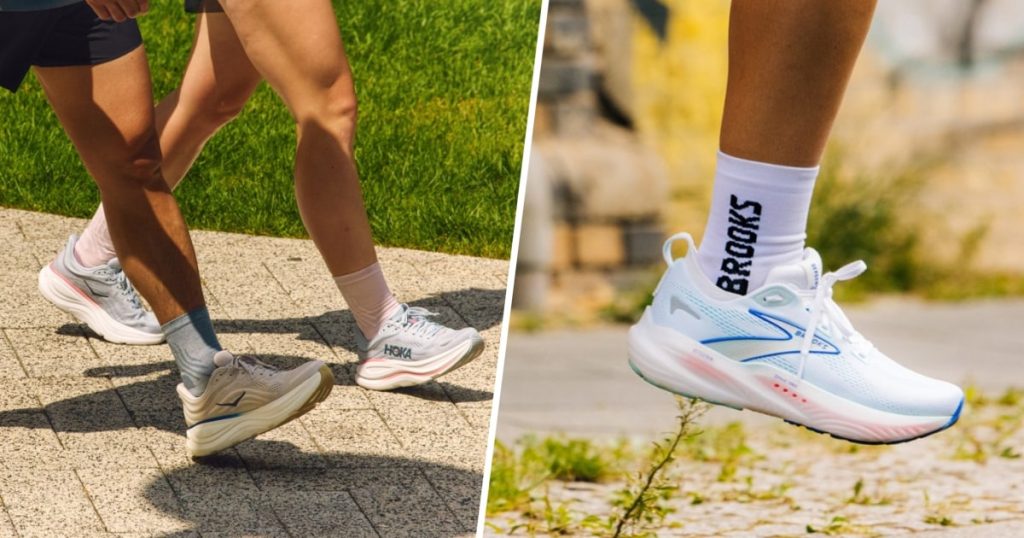
Running is one of my favorite ways to stay active, but it’s also made me super picky about my shoes. Since I deal with plantar fasciitis, I’ve had to make some real changes to my sneaker rotation. Along the way, I’ve learned a ton about running shoes — from what each component does to the difference between zero‑drop styles and higher‑stack pairs.
Plantar fasciitis is common among runners, and the right shoes really can make a difference. A 2024 Journal of Clinical Medicine study even found that simply rotating your sneakers and switching things up can help ease that nagging heel pain. Plus, it’s a fun excuse to try new shoes — who doesn’t love that?
For this story, I reached out to experts who specialize in plantar fasciitis to get their top picks and the features they recommend looking for. I also shared the sneakers currently in my lineup, including the ones I’m using while training for my next half-marathon.
How do I know if I have plantar fasciitis?
“Plantar fasciitis typically presents pain at the bottom of the heel or along the arch, most noticeable with the first steps in the morning or after prolonged periods of rest,” mentions board-certified podiatrist Dr. Najwa Javed. Her patients usually describe it as a “sharp or stabbing pain that improves slightly as they warm up, but worsens again after long periods of standing, walking or running.”
According to podiatrist, Dr. Andrew Brown, this can occur after trauma, changing shoes or activity level. “Most of the time, plantar fasciitis pain resolves on its own within months, but sometimes does require a change in shoes, orthotics and daily stretching exercises,” he adds.
Features to look for in running shoes for plantar fasciitis
So, if you’re looking for a new pair of running shoes, here’s what the experts recommend. “A good pair of running shoes for plantar fasciitis has a heel drop (heel is higher than the front of the foot, about 10 mm is standard) to take stress off the Achilles tendon, as well as having strong arch support to provide stability to the arch and plantar fascia ligament,” says Brown.
Here’s what podiatrist Dr. Priya Parthasarathy recommends keeping in mind when choosing the right running shoes:
- The shoe shouldn’t fold completely in half — it should have some structure.
- Look for a removable insole so you can swap in custom or supportive inserts.
- Make sure it has a firm, supportive heel counter.
- Choose based on your activity: walking, running or navigating outdoor terrain.
“Shoes that are excessively flexible, worn out or minimalist often aggravate symptoms during active flare-ups,” adds Parthasarathy.
Parthasarathy notes to visit your podiatrist to narrow down your footwear choices. “This is crucial to identify, so you purchase the right shoe for your foot type. If you have flatter feet, you are likely a pronator. It is difficult to distinguish between a supinator or neutral on your own. Being in the wrong shoe for your foot type may be what is causing your plantar fasciitis so it is important to not just look for a shoe that is advertised as best for plantar fasciitis but one that fits,” emphasizes Parthasarathy.
Running shoes for plantar fasciitis, recommended by experts

This Altra is a favorite among both editors and experts thanks to its roomy toe box. “Zero‑to‑low drop and a wider toe box are great for anyone who prefers a more natural foot position,” Javed explains. This shoe is built for light roads and mostly pavement, and its low heel‑to‑toe drop helps runners maintain a smooth, natural stride. While the forefoot is nice and spacious, some reviewers mention that the midfoot feels a bit narrow. Still, it’s a solid option for longer runs on cleaner, low‑debris terrain.

Both Javed and Parthasarathy recommend this pair from Brooks because it has a plush midsole and responsive cushioning, making it a great option for longer runs with less heel strain. “I recommend these shoes to my patients due to their naturally roomy toe box and availability in wide and extra wide widths. The GTS model adds stability for patients with overpronation, while the Max version provides enhanced shock absorption for those needing additional cushioning. These variations allow podiatrists to tailor the shoe to the individual support and gait requirements,” adds Parthasarathy.

If you’re looking for an everyday running shoe that can handle a variety of terrain, the Hoka Clifton 10 is a solid pick. Even our runner‑in‑residence and writer Emma Stessman, swears by this pair and has been a longtime Hoka fan because the brand consistently delivers on comfort and performance. “The shoes deliver the ultra-cushioned feel that the brand has become known for. While it’s not the most cushioned shoe that I’ve tried of Hoka’s, it provides a good balance of that springy, cloud-like feel, while still feeling structured,” shares Stessman.
But if you have plantar fasciitis, Parthasarathy recommends these because they are “A great neutral shoe suitable for multiple foot types. It has generous heel cushioning to reduce stress on the heel/plantar fascia during heel strike. They also carry the APMA Seal of Acceptance.”

Brown recommends these Brooks for their cushioned construction and higher midsole drop. This design is an example of a stability shoe that features a higher midsole drop and extra cushioning to support the foot. “Stability shoes are for people who overpronate or turn in; they have been told they have flat feet or collapsing arches. They have firmer foam or guide rails on the inside (medial side) to stop the foot from turning in,” adds Parthasarathy.
Bestseller


Javed recommends these shoes because they are known “For maximum cushioning and soft impact absorption, excellent for heel pain management without feeling unstable.” These are great everyday running shoes thanks to their ultra‑cushioned feel and enough plushness to carry you through long miles. The increased stack height adds extra support and helps reduce pressure, especially if you’re on your feet for hours.
“In general, I advise runners to look for well-cushioned, supportive daily trainers rather than racing shoes. Models with a plush midsole, a stable heel counter, and a smooth transition through toe-off tend to be the most comfortable for runners managing plantar fasciitis,” adds Javed.
Running shoes approved by the writer

I lace up these running shoes whenever I’m heading into the woods and need a little extra support. The midsole has a rockered shape that helps you roll forward smoothly while taking pressure off your heels. They’re super cushioned and supportive — exactly what I want on longer trail runs. They are a bit bulkier than other pairs I own, but that actually makes me feel more secure on uneven ground because they grip well and keep me steady. The built‑in stability plates are also great for preventing my foot from twisting.

The Saucony Ride 19 has become my go‑to shoe for marathon training, mostly because of its midsole drop. I used to train in low‑to‑zero drop shoes, but I eventually realized they were making my arches, heels, and especially my calves feel way more sore after long runs. I recently took these out for a six‑mile run, and they kept my pace steady while giving my heels the support they needed. They’re noticeably lighter than a lot of similar trainers I’ve tried, and the cushioning is so solid that I don’t feel the need to add my own insoles.
Frequently asked questions
“Neutral running shoes are designed for runners whose feet move efficiently without excessive inward rolling. They primarily focus on cushioning and shock absorption. Stability shoes, on the other hand, incorporate additional support elements to limit overpronation. For runners with plantar fasciitis, either category can be appropriate depending on foot mechanics — stability shoes are often helpful for those with flat feet or excessive pronation, and even those suffering from heel pain,” shares Javed.
Brown, Javed and Parthasarathy agree that running shoes should be replaced every 500 miles or so. “But everyone is different in terrain and frequency of use. Otherwise, most tennis shoes for everyday wear are good for about a year to a year and a half,” adds Brown.
“Over time, the midsole cushioning and structural support break down, even if the shoe still looks intact externally. Continuing to run in worn shoes increases stress on the plantar fascia and can contribute to both the development and persistence of symptoms,” shares Javed.
How we chose
Our panel of experts shared their top recommendations and insights on sneakers designed to provide pain relief, with many of their picks tested by Shop TODAY editors. I [Espinal] also contributed several pairs that proved reliable throughout my training hours.
Meet the experts
At Shop TODAY, our reporters interview a range of qualified sources and experts to capture a wide scope of perspectives on running shoes for those with plantar fasciitis. We also make sure that all expert guidance and recommendations are made independently and with no undisclosed financial conflicts of interest.
- Dr. Najwa Javed is a board-certified podiatrist at Silicon Valley Podiatry Group. Throughout her years in practice, she has focused on achieving optimal health for her patients by mitigating foot and ankle injuries.
- Dr. Priya Parthasarathy, DPM, is a partner at US Foot & Ankle Specialists, president of the Maryland Podiatric Medical Association and chair of the APMA Communications Committee.
- Dr. Andrew Brown is a podiatrist with Foot and Ankle Specialists of West Michigan.
View original article here.