
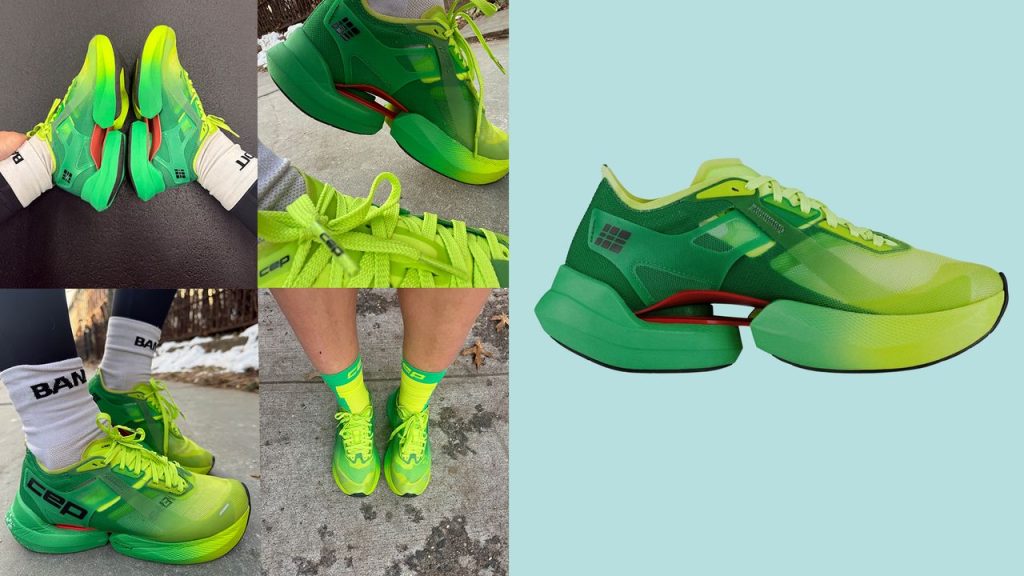
With so many well-established companies dominating the running shoe market, I’m always intrigued, impressed, and a little suspicious when a newcomer enters the chat. So when I saw that CEP, the German brand known for its compression socks, dropped a high-performance running shoe, I was excited to take it for a spin.
On paper, the CEP Pro Run Omnispeed BowTech looks cool as hell. There’s an exposed double-layer plate with a hollowed-out slice underfoot, which the brand calls its BowTech system. It’s meant to mirror the shape of your arch to guide your stride, absorb and return energy, and add a dash of stability to your ride. CEP says the shoe was built to reduce fatigue over long miles and help prevent injury. Pretty ambitious claims, if you ask me. But does it actually deliver? I tested it out for a few months—here’s how it went.

CEP
Table of Contents
Pro Run Omnispeed BowTech
A rigid, structured ride
The standout tech here is CEP’s BowTech plate system, which sits inside the midsole and curves to mirror the shape of your arch. Unlike traditional carbon plates that run flat along the length of your foot, this one is two curved layers of glass fiber reinforced Pebax, a type of flexible, thermoplastic elastomer. Many brands, like Nike, use this material in their midsole foam, but only a few others, like Hoka, have experimented with it compressed into plate-form. Next up, the foam. The brand uses its proprietary nitrogen-infused N+ foam. The front of the shoe has a softer N+ foam, while the back is very firm—noticeably firmer than most super-shoes or daily trainers—and offers more structure than cushioning. If you’re someone who likes soft landings or bounce underfoot, this probably isn’t going to do it for you. That said, if you prefer a rigid, structured ride, you might dig it. CEP also added a semi-rigid TPU foot cage around the midfoot. You can’t really see it, but you can feel the added structure, especially when turning or running on uneven ground. These foot cages aren’t very common in supershoes, because they add a lot of weight. At 10.2 ounces, the Omnispeed BowTech is significantly heavier than other supertrainers, so they didn’t feel particularly nimble underfoot. Just by reading the spec sheet, this shoe sounds like a hybrid of a stability shoe and a plated trainer. But it doesn’t exactly run like one.


Sleek and modern with aggressive arch support
When I unboxed them, I was genuinely stoked. The neon green colorway is bold, and the futuristic plate design definitely stands out. But my excitement swayed once I put them on. Right away, they felt weird. The under-heel sensation was like stepping on two bouncy balls. I assumed it was a break-in issue—some shoes just take a few runs until they feel right—but that initial ride was rough. The fit was also tight overall. I tested a size 8 (I usually wear a 7.5) and still found the toe box overly narrow. Meanwhile, the ankle collar felt loose. (CEP’s FAQ recommends using a heel-lock lacing technique to address this, but I didn’t find this to be helpful.) I do like the upper, though. It’s a fully mesh build that looks sleek and modern. It’s super breathable, and I could see it being a nice choice for hot summer runs. As soon as I started running, the ball-under-the-heel feeling went away, but the aggressive arch support never did. The BowTech plate really pushes up into your foot. I don’t need that level of support, so it just felt intrusive. The problems continued as I kept testing them. Every run, I could hear myself clomping down the sidewalk like a Central Park carriage horse. The noise factor might not matter to everyone, but it was loud enough to make me feel self-conscious.
View original article here.