

Remember those first few months in the gym? Everything was easy. You lifted more every week, and you actually saw changes in the mirror. But now, the progress has stopped. If you are frustrated and wondering why you aren’t growing, you need to learn how to fix muscle building plateau before you waste another year of training.
It takes about 10 years to reach your natural genetic limit. Most people quit or plateau long before that because they stop doing the basics correctly. Here is exactly why you aren’t building muscle anymore and how to get back on track.
Table of Contents
1. You Lack Long-Term Consistency
Most people are only consistent when they are motivated. You might kill it in January, but then you take a week off for vacation. That week turns into a month, and suddenly your momentum is gone.
To build real muscle, you have to show up every single week. Even if it is just two or three times a week, staying in the gym year-round is the only way to ensure long-term growth. If you are slacking off on your diet or your workouts every few months, you aren’t plateauing—you’re just not trying.
2. Your Training Intensity is Too Low

Are you just going through the motions? This is one of the biggest reasons people stop growing. If you want to know how to fix muscle building plateau, you have to look at your intensity.
You need to train close to failure. Most people think they have two reps left in the tank when they actually have five. To grow, you need to train “harder than last time.”
- Track your lifts: Try to add one more rep or one more pound every session.
- Slow down: Focus on the eccentric (lowering) phase of the lift.
- Find failure: Occasionally push until you literally cannot complete another rep with good form.
3. Stop Using “Bro Splits”
If you only train your chest on Mondays and wait a full week to hit it again, you are leaving gains on the table.
When you train a muscle group only once a week, you have 52 opportunities for growth per year. If you switch to a frequency where you hit each muscle two or three times a week, you increase that to 104 or 156 opportunities. Higher frequency allows you to train with more focus and less “junk volume” in a single session.
4. You’re Doing the Wrong Kind of Cardio
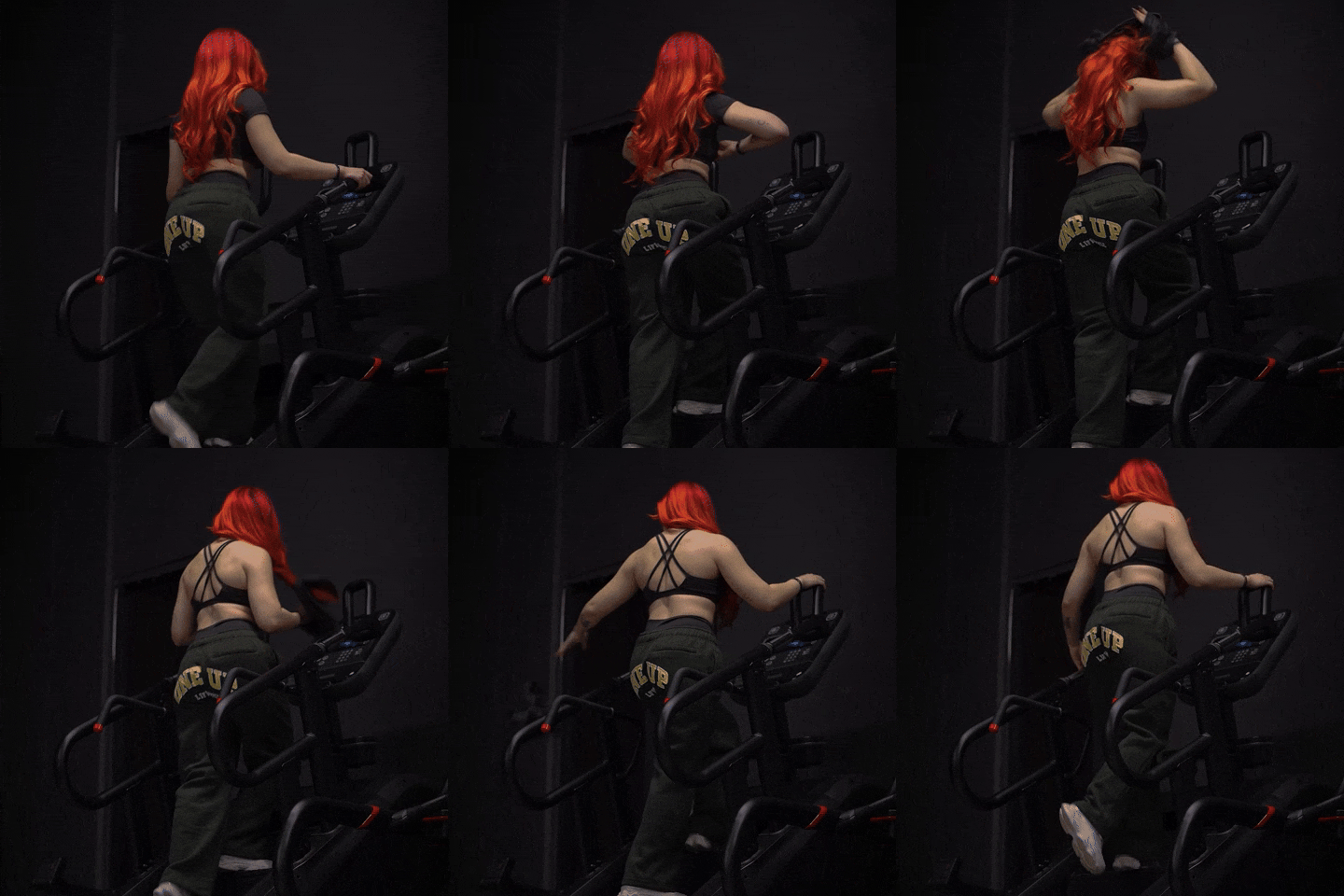
Cardio is great for your heart, but too much “hard” cardio can kill your gains. If you are doing high-intensity interval training (HIIT) or running marathons, your body is struggling to recover.
Switch to Zone 2 Cardio
Instead of sprinting, stick to low-impact movements like:
- Incline walking on a treadmill
- Biking
- The elliptical
These activities improve your cardiovascular health without causing the muscle damage and systemic fatigue that prevents you from lifting heavy.
5. Nutrition and Protein Consistency
You cannot build a house without bricks. If you aren’t eating at least one gram of protein per pound of body weight, your muscles can’t repair themselves.
It’s not just about what you eat, but how consistently you eat it. You can’t eat healthy for three days and then eat junk for four. You need three to five high-protein meals every day to stay in an anabolic state. Also, if you are obsessed with staying “shredded” and refuse to eat enough calories, you simply won’t have the energy required to build new tissue.
6. Don’t Skip Leg Day
Many lifters focus entirely on the upper body because that’s what people see. However, skipping leg day limits your overall potential. Training your entire body, including your legs, triggers a better hormonal response and allows you to carry more total mass. A 180-pound man who trains his whole body will always look better than a 150-pound man who only trains arms.
7. Overcoming Boredom and Overtraining
Sometimes, the plateau is mental. If you are bored with your routine, you won’t push yourself. Try a new gym, a new program, or a new training partner to spark some excitement.
On the flip side, a small percentage of people overtrain. If you are sore for more than two days or you feel exhausted before you even start your workout, you might need a deload week. Rest is where the actual muscle building happens, not the gym.