
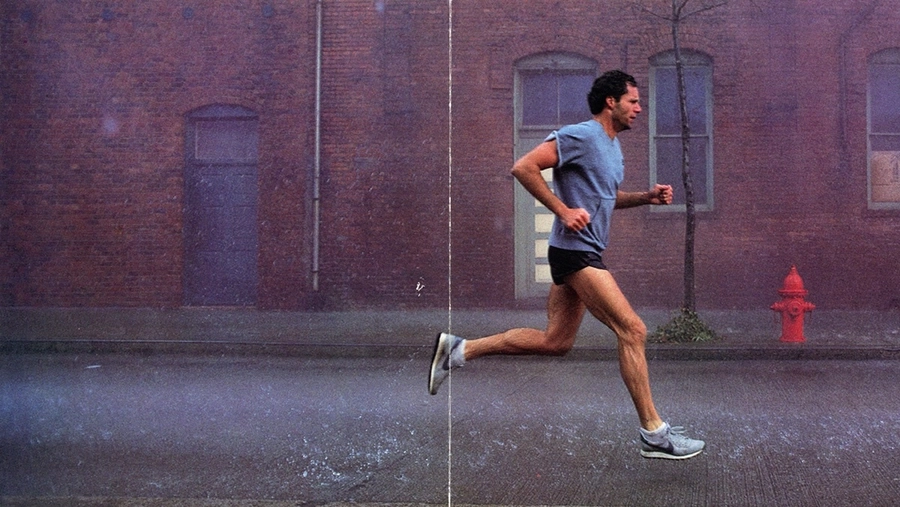
With the Air Wedge Trainer as a foundation, development for the Pegasus took place at Nike’s facility in Exeter, New Hampshire, where the heel Air wedge concept was built into a fully realized running shoe. Bill Peterson designed the outsole. Bruce Kilgore, deep in Air Force 1 development, offered design input. Parker integrated those ideas into a simple, functional upper: gray, with dark navy accents — a look one European sales rep later described as “a rainy day.”
Nike also made a strategic shift to hit its target price of around $50: manufacturing moved to Korea, to the Poon Young factory. Very few running shoes were being produced in Korea at the time. Components had to be imported — Air wedges from the U.S., nylon from Germany — and Nike developers scrambled to refine techniques. “The Air unit didn’t fit correctly in the shoe at first,” recalled footwear innovation veteran Steve Roth. During a vacation back in the U.S., he spent two weeks in Saco, Maine resizing Air wedges by hand so they would sit properly in the midsole.
Still, the project moved fast. In only about four months, Nike had a completed shoe — one built around Air and a carefully selected set of core features: A new EVA foam called Tomilite offered a resilient ride. A waffle outsole, with lugs oriented for motion, gave runners better ground contact and stability. The upper was simple, lightweight and unpretentious.
View original article here.